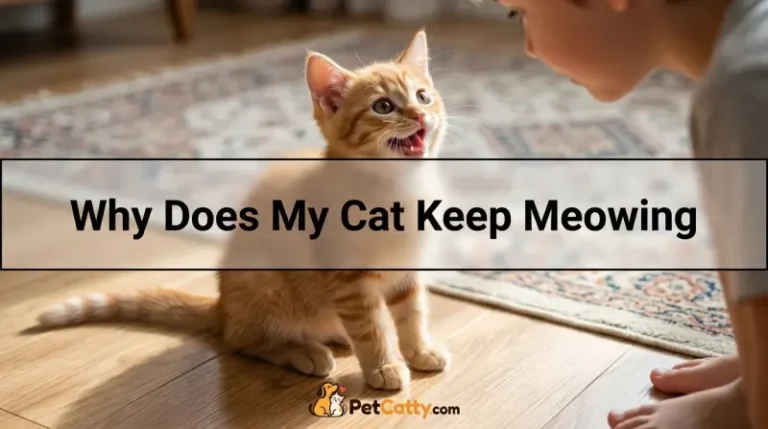
You love your cat. But the non-stop meowing is driving you up the wall. If you're asking yourself "why is my cat meowing so much," you're probably losing sleep, wondering if something is wrong, or just plain frustrated.
That's normal. Cats meow to communicate, but when it becomes excessive, it's a signal. Your job is to figure out what it means.
The hard truth is that excessive vocalization can be anything from "I'm bored, play with me" to "I'm in pain and need a vet right now." As of 2026, veterinary research from the American Association of Feline Practitioners confirms that sudden increases in vocalization are one of the top three reasons cat owners seek help. The key is knowing which version you're dealing with. This guide walks you through it step by step.
Quick Answer
Your cat is meowing too much because something changed. It could be medical, environmental, or behavioral. Start by ruling out emergencies like straining to pee or signs of pain.
Then check the basics: food, water, and litter box cleanliness. If those are fine, consider age-related issues or boredom. Senior cats especially need a vet check for hyperthyroidism, kidney disease, or high blood pressure.
Never punish the meowing. Always rule out medical causes first.
The Problem: Your Cat Won't Stop Meowing and You're Losing Sleep
Excessive cat meowing is one of the most common and most maddening problems cat owners face. It's stressful. You worry something is wrong, but you can't figure out what changed.
Here's what happens in most households. The cat starts meowing more. You try feeding them.
They eat but keep meowing. You try petting them. They purr for a minute then go back to yowling.
You give up and go to bed. They start again at 3 AM.
The core problem is simple. Cats don't meow at each other much. Adult cats mainly meow to communicate with humans.
So when a cat meows excessively, they're trying to tell you something specific. The challenge is that the same vocalization can mean very different things depending on context. A meow at the food bowl is not the same as a meow in the litter box.
A yowl at 3 AM is not the same as a meow when you walk in the door.
The frustration comes from two places. It's hard to know which signals to take seriously. And many common responses, like feeding the cat every time they meow, actually make the behavior worse over time.
The good news is that most causes of excessive meowing are either treatable or manageable. You just need to work through the possibilities in the right order.
The Quick Triage: Is This an Emergency Right Now?
Before you do anything else, rule out a genuine emergency. Some causes of excessive meowing can kill a cat within 24 to 48 hours if ignored. This is not about being dramatic.
It's about knowing what can't wait.
Here is the list of emergency red flags. If your cat is meowing excessively and has ANY of these signs, stop reading and call your vet or an emergency animal hospital immediately.
- Straining to urinate or trying to pee with no result. This is the biggest one. Male cats especially can get a urinary blockage that prevents them from peeing at all. It is excruciatingly painful and fatal within 48 hours if not treated. The cat may yowl in the litter box, go in and out repeatedly, or cry while trying to pee.
- Blood in the urine. Visible blood means an urgent medical problem. It could be a severe UTI, bladder stones, or a blockage.
- Vomiting repeatedly. Especially if paired with not eating or not peeing.
- Collapse, weakness, or inability to stand. This signals a serious systemic issue.
- Open-mouth breathing. Cats do not pant like dogs. Open-mouth breathing is a sign of severe respiratory distress or pain.
- Sudden blindness. A cat who bumps into walls or seems disoriented and is yowling may have sudden high blood pressure. This can cause retinal detachment and permanent blindness if not treated immediately.
- Trauma. If your cat was hit by a car, in a fight, or had a fall and is now meowing excessively, that is a pain response.
If none of these are present, proceed with the structured approach below. If you're unsure, err on the side of caution. A vet visit for a false alarm is much better than waiting too long.
Step 1: Rule Out the Most Common Environmental Causes First
Here's a common scenario. A cat starts meowing constantly. The owner panics and rushes to the vet.
The vet does a full workup. Everything is normal. The owner goes home and realizes the automatic feeder ran out of batteries three days ago.
Environmental causes are the easiest to fix, so we check them first. This step takes about five minutes.
Check the Bowl and the Water
Start with the most obvious thing. Is the food bowl empty? Is the water bowl dry?
Cats can be dramatic about food. Some will meow like they're starving even if the bowl was empty for ten minutes.
But also check for things that aren't obvious.
- Is the food stale or old? Cats have a strong sense of smell. Dry food that's been sitting too long can lose its appeal. They may meow because they want fresh food, not because they're hungry.
- Is the bowl clean? A dirty bowl can harbor bacteria or odors that cats dislike. Some cats refuse to eat from a bowl that has residual smell from previous meals.
- Is the water fresh? Cats prefer running water. Stagnant water in a bowl can make them meow for attention at the sink or a pet fountain.
- Did the automatic feeder malfunction? A jammed feeder is a common culprit.
- Is the bowl in a location the cat dislikes? Some cats won't eat if their bowl is next to a noisy appliance, a high-traffic area, or another cat.
Fix whatever is wrong. If the cat stops meowing after you refresh the food and water, you're done. Problem solved.
If the cat keeps meowing, move on.
Check the Litter Box
Litter box problems are the second most common environmental trigger for excessive meowing. Cats are fastidious animals. When the litter box fails their standards, they will tell you about it.
Here's what to check.
- Is the box clean? Scoop it. If it's overdue for a full dump and scrub, do that. A dirty box can cause a cat to meow in protest.
- Is the litter type the same as always? If you recently switched litter brands or types, the cat may dislike the new texture or smell.
- Is the box in a good location? A box placed next to a loud washing machine, a busy hallway, or near another cat's territory can cause stress.
- Is there enough litter? Some cats are picky about depth. Too little litter can make them refuse to use the box.
- Is there a new box or a removed box? Adding or removing a litter box can confuse cats. Multi-cat households need one box per cat plus one extra.
If the box is clean, the litter is fresh, and the location is quiet, cross this off the list.
Check the Routine
Cats are creatures of habit. When the routine changes, some cats respond with vocalization. This is not them being dramatic.
It's genuine confusion.
Ask yourself what changed recently.
- Did your schedule change? A new work schedule, later bedtimes, or different wake-up times can throw a cat off.
- Did you move the furniture? A simple rearrangement can be deeply unsettling to some cats.
- Did you introduce a new pet or person? A new cat, dog, baby, or house guest can stress an existing cat.
- Did you leave for a trip? Cats can show signs of separation anxiety when you return.
- Did daylight saving time change? Some cats are tuned to the clock. When the feeding time shifts by an hour, they may start meowing at the old time.
If any routine change matches the onset of the meowing, that's your most likely culprit. Give the cat a few days to adjust. Use extra playtime and consistent feeding schedules to anchor the new routine.
If the environment is clean, the food is fresh, and the routine is stable but the cat is still meowing excessively, it's time to consider a medical cause.
Step 2: The Medical Red Flags You Should Never Ignore
If you take nothing else away, remember this rule: assume a medical cause until proven otherwise. Especially for senior cats. Especially for sudden changes.
The problem is that cats hide illness incredibly well. It's an evolutionary survival instinct. A sick cat in the wild is a target for predators.
So they mask symptoms until they absolutely can't. Excessive meowing is sometimes the only outward sign that something is wrong internally.
Litter Box Distress Signals
If your cat is meowing in or near the litter box, or going in and out repeatedly while crying, take this very seriously. This is not a behavioral quirk. It's a classic sign of pain or discomfort during urination or defecation.
The most dangerous condition here is feline lower urinary tract disease (FLUTD) . In male cats, this can lead to a complete urethral blockage, which is a life-threatening emergency. The cat will strain, cry, and produce little to no urine.
Feline idiopathic cystitis is a related condition that causes bladder inflammation without a clear infection. Cats with this condition often meow in the box and may urinate outside it due to pain.
Urinary tract infections (UTIs) are less common in cats than in dogs, but they do happen. A cat with a UTI may yowl when trying to pee and may have blood in the urine.
Constipation can also cause loud meowing in the box. Older cats especially can develop megacolon or become blocked with hair or dry stool.
Any vocalization in or around the litter box warrants a vet visit. Do not wait to see if it improves on its own.
Pain-Related Vocalization Signs
Cats in pain often meow more. The vocalization may sound different from their normal meow. It can be lower in pitch, more drawn out, or more like a yowl or howl.
Common sources of pain that cause excessive meowing include:
- Dental disease. Tooth resorption, abscesses, and gingivitis are painful. Cats may meow before or after eating because chewing hurts.
- Arthritis. Joint pain is common in older cats but often goes undiagnosed. A cat with arthritis may meow when jumping up or down.
- Pancreatitis. Inflammation of the pancreas is painful. Cats with pancreatitis may vocalize, stop eating, and become lethargic.
- Injury or trauma. A cat with a hidden injury may meow in pain. Check for limping, swelling, or sensitivity to touch.
- Hyperesthesia syndrome. This is a neurological condition where the skin becomes hypersensitive. Cats may suddenly yowl and bite at their tail or back.
If your cat is meowing and showing any other signs of pain, a vet visit is in order.
The Senior Cat Warning Signs
Cats over the age of ten are at increased risk for several conditions that cause excessive vocalization. If your senior cat has started meowing a lot, do not brush it off as "old age behavior."
Hyperthyroidism is one of the most common culprits. The thyroid gland produces too much hormone, which ramps up the cat's metabolism. Cats with hyperthyroidism are often hungry all the time, lose weight despite eating, are restless, and vocalize more.
Blood work confirms it. Treatment is highly effective.
Chronic kidney disease (CKD) is another very common condition in older cats. Kidney disease causes toxins to build up in the blood, which can make cats feel nauseous, lethargic, and confused. Some cats yowl because they feel unwell.
Increased thirst and urination are other classic signs.
High blood pressure (hypertension) often occurs alongside kidney disease or hyperthyroidism. It can cause sudden blindness by detaching the retina. A cat that becomes suddenly blind may yowl in confusion and distress.
This is an emergency.
Feline cognitive dysfunction (feline dementia) is similar to Alzheimer's disease in humans. Cats with cognitive dysfunction may yowl at night, seem confused, get stuck in corners, and forget where the litter box is. The meowing is often worse in the dark.
Here's a quick table to help you distinguish between these common senior cat conditions. This is not a substitute for a vet diagnosis.
| Condition | Typical Age | Key Symptoms Beyond Meowing | Diagnosis |
|---|---|---|---|
| Hyperthyroidism | 10+ years | Weight loss, increased appetite, restlessness, vomiting | Blood test (T4 level) |
| Chronic kidney disease | 10+ years | Increased thirst, increased urination, weight loss, bad breath | Blood test (SDMA, creatinine, BUN), urinalysis |
| High blood pressure | 10+ years | Sudden blindness, dilated pupils, disorientation | Blood pressure measurement |
| Cognitive dysfunction | 15+ years | Nighttime yowling, getting lost, house soiling, altered sleep-wake cycle | Diagnosis of exclusion |
As of 2026, the International Society of Feline Medicine recommends annual wellness blood work for all cats over age seven and twice-yearly for cats over age twelve. Many of these conditions are manageable if caught early.
If your cat is over ten and meowing excessively, make a vet appointment. Even if the meowing stops temporarily, the underlying cause will still be there.
Step 3: Age-Based Decision Branch
Now look at the cat's age. The cause of excessive meowing shifts dramatically depending on how old your cat is. Find your cat's age range and read that section first.
Kittens and Young Adults: Probably Just Chatty or Bored
Kittens meow. That's what they do. They meow when they're hungry, when they want attention, when they're exploring, and sometimes just because they discovered their voice.
If you have a kitten under one year who is meowing a lot, start with the environmental checks. The most common reasons are:
- Hunger. Kittens need more frequent meals than adult cats. If they're meowing, try feeding them.
- Boredom. Kittens have endless energy. If they're not getting enough playtime, they will meow for attention.
- Separation anxiety. Kittens taken from their mother too early may vocalize when left alone.
- Exploration. Kittens may meow when they encounter something new or confusing.
For young adult cats between one and three years old, the picture is similar. Some breeds are naturally more vocal. Siamese, Oriental Shorthairs, Bengals, and Sphynx cats are known for being chatty.
If your cat belongs to one of these breeds, a certain amount of meowing is part of their normal personality.
However, if a previously quiet young adult cat suddenly starts meowing excessively, treat it the same way you would for any other age group. Check environment first. Then consider medical causes.
For intact cats, excessive meowing can be related to mating behavior. Females in heat yowl loudly to attract males. Males may yowl in response to a female in heat nearby.
Spaying or neutering almost always resolves this.
Adult Cats (3-10 Years): Look for Changes
Adult cats in this age range are usually settled. They have established routines and personalities. If an adult cat who was normally quiet starts meowing excessively, something changed.
Start with the environmental check. A change in routine, a new pet, a moved litter box, or a dirty water fountain can all trigger a sudden increase in vocalization.
If the environment is stable, consider these possibilities:
- Pain from dental disease. This is extremely common in adult cats but underdiagnosed.
- Urinary issues. FLUTD and urinary crystals can affect adult cats of any age.
- Anxiety or stress. A stray cat outside the window or a new piece of furniture can unsettle them.
- Hyperthyroidism. While more common in seniors, it can develop in cats as young as eight.
For adult cats, the most common mistake is assuming the meowing is purely behavioral. Always rule out medical causes first.
Senior Cats (10+ Years): Assume Medical Until Proven Otherwise
If your cat is ten years or older and has started meowing excessively, assume a medical cause. This is not optional.
We covered the big four earlier. But there are other possibilities too.
- Deafness. Older cats often lose their hearing. A deaf cat may meow much louder because they can't hear themselves.
- Arthritis pain. Joint pain worsens with age. A cat with arthritis may meow when moving or being touched.
- Vision loss. A cat that can't see well may meow in confusion, especially at night.
- Gastrointestinal issues. Older cats are more prone to constipation and inflammatory bowel disease.
Schedule a vet visit. Ask for blood work, a urinalysis, a thyroid panel, and a blood pressure check. These four tests will catch the vast majority of treatable causes.
Do not accept "it's just old age" as an answer. Treatable conditions are common in senior cats, and treatment can add years of quality life.
The Nighttime Yowling Problem: What's Different After Dark
Nighttime yowling is one of the most common and most distressing forms of excessive vocalization. There are specific reasons why cats yowl at night, and they're different from daytime meowing.
Sundowning and Cognitive Dysfunction
The most common cause of nighttime yowling in senior cats is cognitive dysfunction syndrome. The term "sundowning" comes from human dementia research. It describes a pattern where confusion and agitation worsen in the evening and night.
A cat with CDS may sleep deeply during the day and then wake up as dusk falls. Disoriented and confused, they begin to yowl. The darkness makes it worse because their vision is already compromised.
They feel lost in their own home.
The yowling is not attention-seeking. It's genuine distress.
Deafness and Disorientation
Deaf cats meow louder because they can't regulate their volume. They may also yowl at night because they feel isolated. Hearing loss cuts them off from environmental sounds that normally provide comfort.
The silence can feel threatening.
If your cat is meowing loudly at night and doesn't startle at sudden noises, hearing loss is probable.
Arthritis and Pain
Pain from arthritis can worsen at night for a few reasons. The cat has been lying still for a while, and joints stiffen. When they stand up, it hurts.
They may yowl from the pain itself or because they need help getting to the litter box.
Nighttime is also quiet. There are fewer distractions. The cat is more aware of their own discomfort.
Boredom and Daytime Sleep
Some cats yowl at night simply because they slept all day and now they're bored. This is more common in younger cats. Cats are naturally crepuscular, meaning they are most active at dawn and dusk.
If a cat sleeps through the day, they naturally wake up in the evening ready to go.
The solution is to reset their schedule. Engage them in active play right before bedtime. A 15-minute play session that ends with catching a toy and eating a meal can trigger their natural "hunt-catch-kill-eat-groom-sleep" cycle.
After that, they're more likely to settle down for the night.
If the nighttime yowling comes from a senior cat and is paired with confusion, do not assume it's boredom. Have them evaluated for cognitive dysfunction first.
The Behavioral Branch: When It's Not Medical
Let's assume you've done the work. You've ruled out emergencies. You've checked the environment.
You've seen the vet and gotten a clean bill of health. Yet the cat is still meowing excessively.
Now you enter the behavioral branch.
Attention-Seeking Meowing
This is the most common behavioral cause of excessive meowing. It's almost always accidentally trained by the owner.
Here's how it starts. Your cat meows. You respond.
Maybe you give them food. Maybe you pet them. The cat learns that meowing gets a response.
So they meow more. The more consistent the response, the faster the behavior becomes entrenched.
Breaking this cycle requires consistency and patience.
- Stop reinforcing the meowing. No talking. No eye contact. No feeding. No yelling. Nothing. Become a statue.
- Wait for a quiet moment. The second they are quiet, give them attention or a treat. You're training them that silence gets rewarded.
- Be consistent. Every person in the household must follow the same rules.
- Expect an extinction burst. When you first start ignoring the meowing, it will get worse before it gets better. You have to ride this out.
This approach works. It's based on basic behavioral psychology. But if you're not consistent, it will not work.
Boredom and Under-Enrichment
Cats get bored. Bored cats find ways to entertain themselves. Sometimes that entertainment is meowing at you until you do something.
The average indoor cat has a very different life from what their ancestors evolved for. In the wild, a cat would spend hours hunting and exploring. An indoor cat with a food bowl and a litter box has very little to do.
Signs that boredom is the root cause include:
- Meowing that happens at predictable times
- Meowing that stops when you engage with the cat
- Meowing that's directed at you specifically
- Other signs of boredom like knocking things off shelves
Fixing boredom requires enrichment. Good strategies include:
- Puzzle feeders. Make the cat work for their food.
- Regular play sessions. Aim for two to three per day, each 10-15 minutes long.
- Vertical space. Cat trees, shelves, and window perches give cats an elevated view.
- Window access. A bird feeder outside a window can provide hours of entertainment.
- Rotating toys. Cats get bored with the same toys. Rotate them out every week.
Separation Anxiety in Cats
Separation anxiety is less common in cats than in dogs, but it does happen. A cat with separation anxiety may start meowing excessively when you leave the house or soon after you depart.
Signs include:
- Meowing that starts as you prepare to leave
- Meowing reported by neighbors or captured on cameras
- Destructive behavior that only happens when you're gone
- Inappropriate elimination when you're away
Treatment involves desensitization and counterconditioning. Start by leaving for very short periods, then gradually increase the duration. Leave the cat with a high-value treat or toy that they only get when you're gone.
In severe cases, a veterinary behaviorist may recommend medication.
If you suspect separation anxiety, record the cat's behavior while you're away. A simple pet camera can tell you whether the meowing is continuous or tied to specific triggers.
Mistakes That Make the Meowing Worse
Some of the most common responses to excessive meowing accidentally make the problem worse. Here are the mistakes to avoid.
The "Just Feed Them" Trap
Your cat meows. You feed them. They stop.
Problem solved, right? For about ten minutes. Then they meow again.
Now you have a cat who has learned that meowing produces food on demand.
The trap is that it works in the moment. But it trains the cat to meow more. You've taught them to operate a vending machine.
You are the vending machine. The meow is the coin.
The fix is to switch to scheduled feeding. Feed at the same times every day. If the cat meows between meals, ignore it.
Yelling or Punishing
This backfires every time. When you yell at a cat, they don't think "I should stop." They think "My owner is unpredictable and dangerous."
This creates anxiety. An anxious cat is more likely to vocalize, not less. It also damages your relationship.
The cat learns to avoid you rather than trust you.
Research from feline behavior specialists confirms that punishment-based approaches consistently fail with cats. Positive reinforcement and extinction are more effective and more humane.
Assuming "It's Just Old Age"
This might be the most costly mistake. When a senior cat starts meowing excessively, many owners assume it's just part of getting old. They don't pursue a diagnosis.
The problem is that "old age" is not a medical condition. The excessive meowing almost always has a specific cause, and many of those causes are treatable.
Hyperthyroidism is treatable with medication, diet, or radioactive iodine therapy. Chronic kidney disease is manageable. High blood pressure is treatable.
Cognitive dysfunction can be managed.
If you accept excessive meowing as just old age, you miss the chance to treat a real medical problem. Any behavioral change in a senior cat is medical until proven otherwise.
When You Absolutely Need a Vet
You've worked through the steps. The cat is still meowing excessively. It's time for a vet visit.
Here's when you should definitely schedule a vet visit:
- The meowing started suddenly.
- The meowing is paired with other symptoms. Weight loss, increased thirst, decreased appetite, vomiting, or changes in litter box habits.
- The meowing is happening in or near the litter box.
- The cat is a senior.
- The meowing is interfering with the cat's quality of life.
- You've tried behavioral strategies for 2-4 weeks with no improvement.
When you go to the vet, here's what to ask for:
1. Complete blood count and chemistry panel. This checks organ function and catches infections.
2. Thyroid panel (T4 level). This checks for hyperthyroidism.
3. Urinalysis. This checks for UTIs, kidney disease, and urinary crystals.
4. Blood pressure measurement. Hypertension is common and easy to treat.
5. Dental examination under anesthesia if needed. Dental disease is painful and often missed.
6. Imaging if indicated. X-rays or ultrasound for internal issues.
Expect to spend between $200 and $500 for a basic workup. That's much less than the cost of treating a progressed disease.
How to Build a Long-Term Plan
Here's your workflow summary.
Step One: Immediate triage. Check for emergency signs. If present, go to the vet now.
Step Two: Environmental check. Check food, water, and litter box. Fix anything you find. Wait 24 hours.
Step Three: Medical evaluation. If meowing persists, schedule a vet visit.
Step Four: Behavioral assessment. If the vet gives a clean bill of health, adjust your response. Ignore attention-seeking meowing. Add enrichment for boredom.
Address separation anxiety.
Step Five: Long-term monitoring. Track the results over two to four weeks. If the meowing is decreasing, keep doing what you're doing. If not, go back to step three or consult a veterinary behaviorist.
Real Scenarios: What This Looks Like in Practice
The 14-Year-Old Night Yowler
A 14-year-old cat starts yowling at 2 AM. The owners assume he's lonely. They try feeding him.
They try sleeping on the couch. Nothing helps.
The real issue is cognitive dysfunction. His sleep-wake cycle is disrupted. A vet visit rules out hyperthyroidism and high blood pressure.
The fix includes night lights, a heated bed, and nightly playtime. Medication helps. Within two weeks, the yowling drops to once or twice a week.
The 3-Year-Old Food Demander
A 3-year-old cat meows loudly at 5 AM for food. His owners have fed him on demand for months. He's learned that persistence pays off.
The fix is a strict scheduled feeding routine. The owners ignore all early morning meowing. The first three days are terrible.
By day seven, the cat sleeps until breakfast time.
The 6-Year-Old Litter Box Crier
A 6-year-old cat yowls every time she uses the litter box. She also pees on the bath mat.
The real issue is feline idiopathic cystitis. Her bladder is inflamed. It hurts when she pees.
A vet prescribes pain medication and a urinary health diet. The yowling stops within 24 hours.
How to Create a Cat-Friendly Home Environment
A well set up home prevents many common triggers before they start.
The Five Pillars of a Healthy Feline Environment
Based on guidelines from the American Association of Feline Practitioners and the International Society of Feline Medicine.
1. A safe space. Every cat needs somewhere to retreat. A cat tree with a covered cubby or a cardboard box in a quiet corner works.
2. Multiple and separated key resources. In a multi-cat household, you need multiple food bowls, water stations, and litter boxes. One per cat plus one extra.
3. Opportunity for play and predatory behavior. Cats need play that mimics hunting. Wand toys are excellent.
Follow up with a small meal to complete the cycle.
4. Positive, consistent human interaction. Cats need predictable interaction. Inconsistent attention creates anxiety.
5. An environment that respects cats' senses. Avoid scented litters and loud noises near their spaces.
The Role of Routine
Cats thrive on predictability. A consistent daily routine includes feeding at the same times, play at the same times, and a bedtime ritual.
Simple Environmental Fixes
- Move the food bowl away from walls.
- Add a second water source or a pet fountain.
- Create a window perch.
- Use vertical space with cat trees.
- Scoop the litter box daily.
- Provide scratching surfaces.
What to Expect from Medication and Professional Help
Sometimes environmental changes aren't enough. Some cats need medication.
Medications for Medical Causes
- Hyperthyroidism: Methimazole or radioactive iodine therapy.
- High blood pressure: Amlodipine.
- Chronic kidney disease: Diet and supportive care.
- Cognitive dysfunction: Selegiline and nutritional supplements.
Medications for Behavioral Issues
- Fluoxetine: For anxiety and compulsive behaviors. Takes 4-6 weeks to work.
- Gabapentin: For situational anxiety and pain. Works within hours.
- Clomipramine: An older option for anxiety.
- Buspirone: For mild to moderate anxiety.
None of these should be started without a vet consultation.
What to Expect from a Veterinary Behaviorist
If your regular vet has ruled out medical causes and the cat is still meowing excessively, a veterinary behaviorist can help. The initial consultation takes 60 to 90 minutes. Expect to pay between $200 and $600.
A Realistic Timeline
- Day 1-7: Gabapentin works quickly. Long-term meds haven't kicked in yet.
- Week 2-4: Long-term meds begin to take effect.
- Week 4-8: Full effect of most behavioral medications.
- Month 3-6: Optimal results. Re-evaluation.
- Month 6-12: Some cats can be weaned off medication.
The Cost of Ignoring the Problem
A treatable medical condition gets worse. Hyperthyroidism leads to heart disease. Kidney disease worsens.
A urinary blockage can kill a male cat within 48 hours.
Behavioral meowing also gets worse. The owner becomes more frustrated. Some owners end up rehoming the cat.
This is heartbreaking because the problem was solvable.
When the Meowing Stops: What Silence Means
Sometimes the silence is its own signal. A cat who was vocal and suddenly goes quiet can be telling you something important.
A sudden stop in vocalization can mean the cat is too sick to meow. Cats in severe pain or advanced illness sometimes go silent. If your cat was meowing excessively and then suddenly stops while also becoming lethargic, hiding, or refusing food, that's a red flag.
Normal quietness looks different. A settled cat should still be eating, grooming, and using the litter box. They should seem relaxed, not withdrawn.
If the silence is paired with hiding, not eating, or unresponsiveness, call your vet. Otherwise, enjoy the quiet.
How to Handle Multi-Cat Household Meowing
Meowing as a Territorial Signal
Cats in multi-cat households may meow to establish territory. The solution is to provide enough resources for every cat in separate locations.
Meowing When You Pet Another Cat
This is about social hierarchy. The solution is to make sure all cats get equal attention.
Meowing After Introductions
When you bring a new cat home, expect increased vocalization for two to four weeks. If it continues beyond a month, there may be an underlying conflict.
The Role of Breed in Vocalization
High Vocalization Breeds
Siamese, Oriental Shorthairs, Bengals, Sphynx, Burmese, and Tonkinese are naturally more vocal. This is normal for these breeds.
Low Vocalization Breeds
Persians, Exotic Shorthairs, British Shorthairs, and Ragdolls are generally quiet. If one of these breeds starts vocalizing excessively, take it more seriously.
| Breed | Typical Vocal Level |
|---|---|
| Siamese | High |
| Oriental Shorthair | High |
| Bengal | High |
| Sphynx | Medium to high |
| Burmese | Medium |
| Tonkinese | Medium |
| Maine Coon | Low to medium |
| Ragdoll | Low |
| British Shorthair | Low |
| Persian | Low |
| Exotic Shorthair | Low |
| Domestic Shorthair | Variable |
How to Rule Out Pain as a Cause
Signs of Pain Beyond Meowing
- Changes in posture. Hunched back, tucked legs, refusal to move.
- Changes in grooming. Greasy, matted coat or overgrooming a specific area.
- Changes in facial expression. Tense eyes, flattened ears, dilated pupils.
- Changes in behavior. Hiding, avoiding touch, aggression.
- Changes in appetite. Stopping eating, especially if chewing hurts.
How to Check for Pain at Home
Watch the cat move. Do they hesitate before jumping? Land stiffly?
Avoid stairs?
Gently run your hands along their spine and legs. If they flinch or pull away, note the spot.
Check their mouth if they let you. Look for red gums, broken teeth, or visible lesions.
Common Pain Sources
- Dental disease
- Arthritis
- Pancreatitis
- Urinary tract pain
- Ear infections
- Constipation
- Injury
What to Do
Do not give human pain medication. Acetaminophen and ibuprofen are toxic to cats. Schedule a vet visit instead.
When to Reassess Your Approach
The One Month Check In
After one month of consistent effort, you should see noticeable improvement. If there's zero change, something is wrong.
Common reasons for no improvement:
- An incomplete diagnosis
- Inconsistent behavior modification
- A new problem developed
- The environment isn't fixed
- Medication needs adjustment
The Three Month Check In
If you've been working on this for three months and still have significant meowing, see a veterinary behaviorist.
When to Accept a New Normal
Some conditions can't be cured. Chronic kidney disease has good days and bad days. Cognitive dysfunction can be managed but not reversed.
Your goal shifts from stopping the meowing to managing it. Measure progress against where you started, not against an impossible ideal.
Long-Term Prevention
Annual Wellness Checks
Annual exams for cats under seven. Twice yearly for cats seven and older. Blood work catches problems before they cause meowing.
Maintaining Environmental Stability
Once you've found a routine that works, stick with it. Feed at the same times. Play at the same times.
Make changes slowly.
Enrichment as a Lifestyle
Introduce one new enrichment item per month. Rotate toys. Add puzzle feeders.
Keep the environment fresh.
Monitoring Your Cat's Baseline
Know what normal looks like. Note any changes. If the cat starts meowing more for three days in a row, investigate.
Your Own Consistency
You are the most important factor. If you stay consistent, your cat will learn what to expect. Predictable cats are quieter cats.
Frequently Asked Questions
Why does my cat meow after eating?
Some cats meow after eating because they're satisfied. Others meow because they want more food, especially if they have hyperthyroidism. Still others may meow because their stomach hurts after eating due to dental pain or digestive issues.
Why does my cat yowl when I leave the house?
This is often separation anxiety. Recording the behavior with a camera can confirm it. Treatment involves desensitization and leaving enrichment items.
Why does my cat meow in the litter box?
Meowing in the litter box is a red flag. It usually means the cat is in pain while trying to urinate or defecate. Call your vet.
Why is my cat suddenly meowing at the wall?
This can be cognitive dysfunction, hearing loss, or vision problems. In rare cases, it can be neurological. Have the cat evaluated if it's paired with confusion.
How long does it take to stop a cat from attention meowing?
Most cats respond within one to three weeks of consistent extinction. The first few days are the hardest.
Should I get a second cat to stop my cat from meowing?
This is risky. It sometimes works if the meowing was due to loneliness. But it can also make things worse.
Do it because you want another cat, not just to fix the meowing.
Can diet cause excessive meowing?
Yes. Food allergies or intolerances can cause digestive discomfort. A low quality diet can cause nutritional deficiencies.
If you suspect diet is a factor, try a high quality limited ingredient diet.
What's the difference between a meow and a yowl?
A meow is typically short and high pitched. A yowl is longer, lower pitched, and drawn out. Yowling often indicates distress or intense need.
What if my cat is meowing and also hiding?
This is a classic pain signal. Even if the cat seems fine otherwise, schedule a vet visit.
My cat is meowing but still eating and using the litter box. Should I still worry?
It depends. If the cat is a senior, the meowing is new, or you can't find a trigger, a vet visit is still a good idea. Eating normally does not rule out medical causes.
Does breed affect how much a cat meows?
Absolutely. Siamese cats are famously chatty. Persians are quiet.
Know your cat's breed baseline.
Is it ever normal for a cat to meow a lot?
Yes. Some cats are naturally more vocal. The question is whether the meowing has increased from their personal baseline.
When should I see a veterinary behaviorist?
If you've ruled out all medical causes, adjusted the environment, tried consistent behavior modification for at least four weeks, and the cat is still meowing excessively, it's time for a specialist.
How do I know if my cat's meowing is normal or excessive?
There's no universal number that counts as excessive. The question is whether the meowing has increased from your cat's normal baseline. A cat who has always been chatty and stays that way is fine.
A cat who was quiet and suddenly becomes vocal has a reason. Track the frequency for a few days. If the meowing is more than double the cat's usual amount, or if it's happening at times when it never used to, it's worth investigating.
Trust your gut. You know your cat better than anyone.
Can I train my cat to be quieter?
Yes, to a point. You can't change a cat's fundamental personality. A Siamese will always be more vocal than a Persian.
But you can reduce excessive meowing by not reinforcing it and by rewarding quiet behavior. Some cats can learn a "quiet" cue. When the cat is quiet, say "quiet" in a calm voice and give them a treat.
Over time, they may learn to be quiet on command. This works best with food motivated cats.
My cat meows while carrying a toy in their mouth. Why?
This is a common behavior, especially in spayed females. It's thought to be a remnant of maternal behavior. The cat is carrying the toy like a kitten and meowing because they're looking for a safe place to "nest." It can also be attention seeking.
The cat wants you to see their trophy. As long as the cat seems happy and the behavior is occasional, it's nothing to worry about.
Should I use a spray collar or punishment device?
No. These aversive devices cause fear and anxiety. They don't teach the cat an alternative behavior.
They just suppress the meowing temporarily while making the cat more stressed. A stressed cat is more likely to develop other behavioral problems. Stick with positive approaches.
They take longer but they actually work without damaging your relationship with your cat.
What's the difference between yowling and caterwauling?
Yowling is the general term for a loud, drawn out vocalization. Caterwauling specifically refers to the sound a cat makes when they're in heat or trying to attract a mate. It's a distinctive wailing sound.
If your intact cat is caterwauling, spaying or neutering will stop it. If your spayed or neutered cat is making a similar sound, it's yowling from another cause, usually pain or disorientation.
How long does it take to see results from medication?
For acute anxiety or situational meowing, gabapentin can work within hours. For long-term medications like fluoxetine, expect four to six weeks to see full effects. Some cats respond faster.
Some need a dose adjustment. Follow up with your vet at the four week mark to evaluate progress.
Should I get a second opinion?
If your vet says "it's just old age" without running blood work, yes, get a second opinion. If your vet ran appropriate tests and found nothing, and the behavioral approaches aren't working, a second opinion from a feline-only veterinarian or a veterinary behaviorist is a good idea. Different vets have different areas of expertise.
Sometimes a fresh pair of eyes catches something the first vet missed.