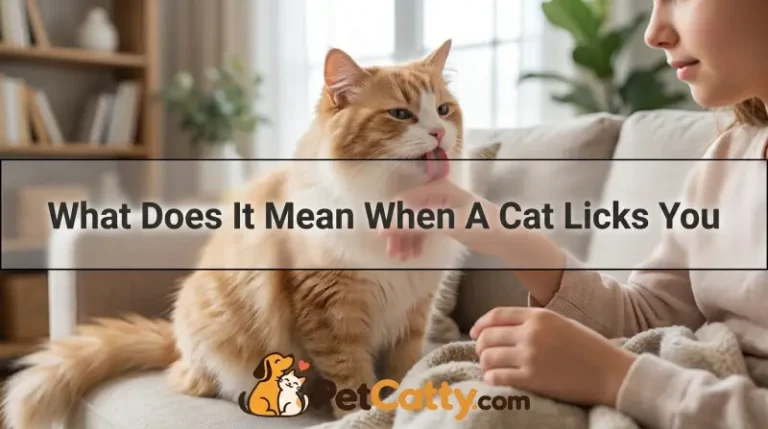
If you've ever wondered why is your cat licking you, you're not alone. It's one of the most common questions cat owners ask. The answer isn't always simple.
Cats lick their humans for many reasons, from deep affection to hidden medical issues. Telling the difference matters for both your wellbeing and theirs.
Veterinary behavior research from Cornell University's College of Veterinary Medicine shows that allogrooming, the technical term for social licking between cats, serves multiple functions. It's a bonding ritual, a scent-marking behavior, and sometimes a stress response. As of 2026, feline behaviorists have identified at least seven distinct motivations behind this common behavior.
Let's walk through each one so you can figure out what your cat is actually saying.
Quick Answer
Cats lick their owners for several reasons. The most common is affection and bonding. They also lick to mark their scent on you.
Some cats lick as a stress-coping mechanism. Medical issues can trigger excessive licking too. The context around the lick tells you which one it is.
The 7 Reasons Your Cat Might Be Licking You (Broken Down by Context)
The Affection Lick (It's a Love Language)
This is the one most owners want to hear. When your cat licks you while purring, kneading, and making slow eye contact, that's a classic social grooming session. In the feline world, grooming another cat is a sign of trust and close bonding.
Your cat is treating you like part of their colony.
You'll usually see this type of licking during calm moments. Maybe you're sitting on the couch watching TV. Maybe you've just woken up and your cat is curled on your chest.
The licking is gentle, rhythmic, and paired with soft purring. Your cat's body language is loose and relaxed. Their tail might be wrapped around your arm or gently twitching at the tip.
This is the kind of licking you can feel good about. It's a genuine sign that your cat feels safe and bonded to you. Research indicates that cats who engage in regular allogrooming with their owners tend to have stronger, more secure attachment patterns.
The Scent Marking Lick (You're Their Property)
Cats have scent glands on their tongues. When your cat licks you, they're depositing their personal scent onto your skin. This is a territorial behavior, but it's not aggressive.
Think of it as your cat saying "this human belongs to me."
You'll notice this version of licking when your cat is feeling particularly possessive. Maybe you just came home from work smelling like other people or animals. Or maybe another pet in the household has been rubbing against you.
Your cat might give you a few firm licks, then rub their cheek against your hand or face to reinforce the scent message.
This scent marking is usually brief and purposeful. It's not the long, relaxed grooming session of the affection lick. It's more of a quick, deliberate series of licks, often followed by head bunting or cheek rubbing.
Your cat is essentially updating their scent map of you.
The Attention Lick (Trained by You, Honestly)
Let's be honest. You've probably trained your cat to lick you for attention. Here's how it works.
Your cat licks your hand. You look down. You talk to them.
Maybe you pet them or give them a treat. Your cat learns that licking equals your attention.
This type of licking happens most often when your cat wants something specific. Maybe it's dinner time. Maybe the water bowl is empty.
Maybe they just want a cuddle session. The licking is often persistent and directed at your hands, face, or any exposed skin. It stops as soon as you respond to them.
The tricky part is that this is a self-reinforcing cycle. Every time you respond to the lick, you're telling your cat it works. If you want to break the cycle, you need to ignore the licking and instead reward your cat when they use other behaviors.
Sitting quietly or meowing at their food bowl are good alternatives to reward.
The Stress Lick (Self-Soothing in Action)
Cats use licking as a coping mechanism for stress and anxiety. It releases endorphins that help them calm down. This is the same reason some cats over-groom themselves when they're stressed.
Licking you can serve the same function.
You'll see this version of licking during or after stressful events. Maybe there's construction noise outside. Maybe you've just had a loud argument.
Maybe a new pet or person has entered the household. The licking might feel more intense or repetitive than usual. Your cat's body language might be tense.
Their ears might be slightly flattened. Their pupils might be dilated.
The key difference with stress licking is that it's compulsive. Your cat doesn't seem to be enjoying the interaction. They seem driven to keep licking, almost like they can't stop.
If you try to move away, they might follow you and continue licking. This is a sign that your cat needs help managing their stress levels.
The Medical Check Lick (They Sense Something Off)
Cats have an extraordinary sense of smell. They can detect changes in your body chemistry that you can't even notice. Some cats will lick persistently at a specific spot on your skin where there's a wound, a rash, or even an underlying medical condition.
This isn't just curiosity. Research from the Journal of Feline Medicine and Surgery has documented cases where cats repeatedly licked areas of their owners' skin where tumors were later discovered. The exact mechanism isn't fully understood, but it likely involves the cat detecting volatile organic compounds released by abnormal cells.
If your cat is fixated on licking one specific spot on your body, pay attention. It's probably nothing serious. But if the licking is persistent and focused on a single area, it's worth mentioning to your doctor.
Your cat might be trying to tell you something important.
The Taste Lick (You Taste Like Lunch)
Sometimes a lick is just a lick. Your skin is covered in salt, oils, and traces of whatever you've eaten or applied. Some cats are drawn to the taste of certain lotions, sunscreens, or even the salt from sweat.
This type of licking is usually brief and focused on a specific area where you've applied something. Maybe your cat is licking your hand after you put on hand cream. Maybe they're licking your arm after you've been working out.
The licking stops once the taste is gone.
The risk here is that some human skincare products contain ingredients that are toxic to cats. Essential oils, retinol, and certain sunscreen ingredients can cause serious problems if ingested. Always check the ingredients of anything you put on your skin if you have a cat who likes to lick you.
The Suckling Lick (Leftover Kitten Behavior)
Some cats, especially those who were weaned too early or orphaned, develop a behavior called wool sucking. They knead and suckle on soft fabrics, or sometimes on their owner's skin. This is a comfort behavior rooted in kittenhood.
You'll see this most often in cats who were separated from their mothers before eight weeks of age. The behavior is usually accompanied by kneading, soft purring, and a dreamy, distant look in the cat's eyes. They might drool a little while they do it.
This behavior is generally harmless. It's a self-soothing mechanism that helps your cat feel safe. The only concern is if your cat starts ingesting fabric or causing skin damage.
Otherwise, let them have their comfort ritual. It's a sign that you're a safe, trusted person in their life.
How to Read Your Cat's Body Language Alongside the Licking
The lick itself is only half the story. Your cat's body language tells you the rest. You need to read the whole picture to understand what your cat is communicating.
Purring + Kneading + Licking
This is the happy trifecta. Your cat is purring, rhythmically kneading with their paws, and licking you. Their eyes are probably half-closed or slowly blinking.
Their body is relaxed. Their tail is calm.
What it means: Pure affection and contentment. Your cat is in a state of deep trust and relaxation. They're treating you like a fellow cat they love and trust.
This is the most straightforward sign of affection.
Silent Licking with Stiff Posture
Your cat is licking you, but they're not purring. Their body is tense. Their ears are slightly back or flattened.
Their tail might be twitching or thumping. They might be avoiding eye contact.
What it means: Stress or anxiety. Your cat is using licking to self-soothe, but they're not actually calm. Something in their environment is bothering them.
Look for the source of stress and address it. The licking will stop when the stressor is removed.
Licking Then Biting (The Overstimulation Switch)
This is one of the most confusing behaviors for cat owners. Your cat is happily licking you, and then suddenly they bite you. It's not a hard bite, usually.
It's a quick nip or a gentle mouthing.
What it means: Overstimulation. Your cat got too excited or too sensitive to the sensation of being petted or touched. The licking was building up sensory input, and the bite is your cat's way of saying "that's enough." This is especially common during petting sessions.
Your cat is not being mean. They're just overwhelmed.
The fix is to watch for early warning signs. Your cat's tail might start twitching. Their ears might flatten.
Their skin might ripple. When you see these signs, stop petting and let your cat walk away. The bite is a last resort communication.
Licking While Avoiding Eye Contact
Your cat is licking you, but they're deliberately looking away. Their head is turned. Their eyes are focused on something else.
They might be licking quickly and then stopping.
What it means: Ambivalence or uncertainty. Your cat wants to interact with you, but they're also slightly nervous or unsure. This is common in newly adopted cats or cats who haven't fully bonded with you yet.
It's a tentative form of social grooming. Give your cat space and let them approach you on their terms.
Decision Tree: What's My Cat Really Trying to Tell Me?
This is the practical part. Here's a step-by-step process to decode your cat's licking behavior. Work through these steps in order.
Step 1: Observe the When and Where
Start with the basics. When does the licking happen? Where on your body does your cat focus?
The answers narrow down the possibilities.
- Morning or late evening licking: Often affection or attention seeking. Your cat is happy to see you.
- Licking after you come home: Scent marking. Your cat is checking and updating your scent.
- Licking during petting sessions: Overstimulation risk. Watch for the bite.
- Licking after you apply lotion or sunscreen: Taste. Check the ingredients.
- Licking at a specific, unchanging spot: Medical check. Pay attention.
- Licking during stressful events: Stress relief. Address the stressor.
- Licking your face or hair at night: Bonding and comfort. Your cat feels safe next to you.
Step 2: Check the Body Language
Look at your cat's whole body. Don't just focus on the licking.
| Body Language | Most Likely Meaning |
|---|---|
| Purring, kneading, relaxed posture | Affection and bonding |
| Stiff body, flattened ears, dilated pupils | Stress or anxiety |
| Twitching tail, skin ripples | Overstimulation, imminent bite |
| Avoiding eye contact, tense posture | Uncertainty or nervousness |
| Dreamy eyes, drooling, kneading | Suckling behavior, comfort |
| Focused on one spot, intense sniffing | Medical concern or taste |
Step 3: Rule Out Medical Issues
Some medical conditions can cause excessive licking in cats. If your cat's licking behavior has changed suddenly or become obsessive, consult your veterinarian.
- Dental pain: Cats with sore mouths may lick excessively, including licking their owners.
- Nausea: Cats with gastrointestinal issues sometimes lick surfaces or people as a coping mechanism.
- Hyperthyroidism: This condition can cause increased anxiety and repetitive behaviors.
- Cognitive dysfunction: Senior cats with dementia may develop new licking habits.
- Skin allergies or pain: Your cat might be licking you because they're uncomfortable themselves.
The rule of thumb is simple. If your cat's behavior changes suddenly, or if the licking becomes compulsive and interferes with normal activities, see a vet. The same goes if your cat is also licking themselves excessively, losing weight, or showing changes in appetite or litter box habits.
Step 4: Test the Environment
If medical issues are ruled out, look at your cat's environment. Stress is a common cause of excessive licking.
- Has anything changed in your home? New pet, new baby, new furniture, recent move.
- Is your cat getting enough enrichment? Bored cats may develop repetitive behaviors.
- Is there a schedule change? Cats are creatures of routine. Disruptions can cause anxiety.
- Is there a conflict with another pet? Tension in multi-pet households can trigger stress licking.
Try adding more environmental enrichment. Puzzle feeders, window perches, interactive play sessions, and vertical spaces all help reduce stress. A tired cat is a less anxious cat.
Step 5: Decide on Action or Reassurance
Once you've worked through the steps, you'll have a good idea of what's driving the behavior. Here's how to respond.
- Affection licking: Enjoy it. Return the affection gently. Slow blink at your cat.
- Scent marking: Accept it. Your cat is claiming you. It's a compliment.
- Attention seeking: Decide if you want to reinforce it. If not, ignore the lick and reward other behaviors.
- Stress licking: Address the stressor. Provide a safe space. Consider a pheromone diffuser.
- Medical check licking: Note the spot. Mention it to your doctor. Monitor for changes.
- Taste licking: Check your skincare products. Wash your hands before touching your cat.
- Suckling behavior: Allow it if it's not causing harm. It's a comfort ritual.
When to Stop Worrying (And When to Call the Vet)
Not all licking is a problem. Most of the time, it's normal cat behavior. But there are clear patterns that separate healthy licking from concerning licking.
Normal Licking Patterns
- Brief licking sessions, a few seconds to a couple of minutes
- Licking that stops when you move or when your cat loses interest
- Licking paired with purring, kneading, and relaxed body language
- Licking that occurs in predictable contexts, like after meals or during quiet time
- Licking that doesn't cause skin irritation or damage
Concerning Licking Patterns
- Licking that lasts for extended periods, 15 minutes or more
- Licking that continues even when you try to move away
- Licking that seems compulsive, driven, or hard to interrupt
- Licking that causes redness, irritation, or soreness on your skin
- Licking focused on a single, unchanging spot on your body
Red Flags That Need a Vet Visit ASAP
- Sudden onset of excessive licking with no obvious trigger
- Licking accompanied by other symptoms: vomiting, diarrhea, weight loss, appetite changes
- Your cat is also over-grooming themselves, causing bald patches or skin lesions
- Your cat seems distressed or anxious when they're not licking
- The licking is interfering with your cat's normal activities, like eating, sleeping, or playing
- Your cat is a senior and the behavior is new
The Journal of Feline Medicine and Surgery emphasizes that any sudden behavior change in cats warrants a veterinary evaluation. Cats are masters at hiding illness. A change in behavior is often the first visible sign that something is wrong internally.