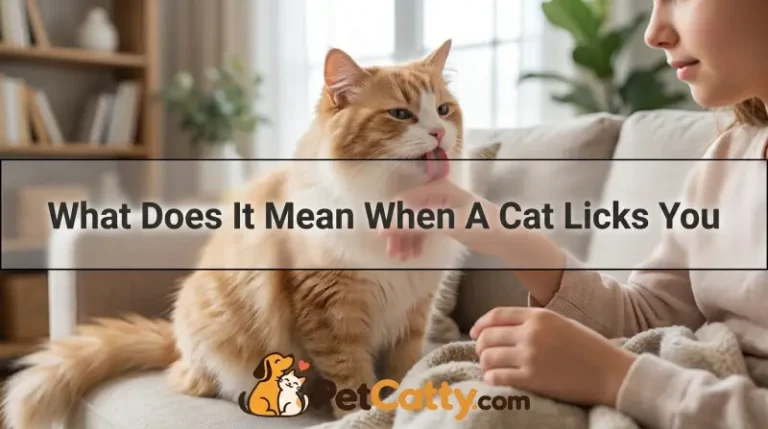
You’re sitting on the couch, hand resting on your cat’s back, stroking that perfect spot between the ears. He’s purring like a tiny motor. Life is good.
Then you feel it. A warm, wet drop lands on your arm. Another one.
You look down and there’s a small puddle of drool forming on your knee.
If you’ve ever thought "why does my cat drool when I pet him" while wiping saliva off your favorite jeans, you’re not alone. It’s one of those cat behaviors that sits right in the gray zone between adorable and alarming. According to veterinary behavior research from Cornell University’s College of Veterinary Medicine, approximately 15 to 20 percent of cats drool during positive human interaction.
But the same symptom can also signal serious health problems. The tricky part is telling the difference. Let’s walk through it together.
Read More: What Kind of Cat Do I Have? Find Out
Quick Answer
Your cat drools when you pet him because he’s relaxed and happy. The kneading motion and purring stimulate saliva production. Some cats simply produce more drool when they’re content.
This is normal behavior for many cats. It’s a sign of trust and comfort. The drool should be thin and clear.
It should only happen during petting or cuddling. If the drool is thick, smelly, or happens when you’re not touching him, that’s different.
Problem / Pain Point – Why Your Cat’s Drool Has You Worried
Let’s be honest. Drool is not what most of us signed up for when we adopted a cat. Dogs drool.
That’s expected. But cats are supposed to be clean, dignified, and dry. When a warm dribble lands on your hand mid-petting session, it’s natural to wonder if something is wrong.
The real problem is that drooling in cats can mean two completely opposite things. It can mean your cat is so blissed out that he’s literally leaking happiness. Or it can mean his mouth hurts, his stomach is upset, or he’s been exposed to something toxic.
One is a compliment. The other is a medical emergency. And they look nearly identical to the untrained eye.
This uncertainty creates real anxiety for cat owners. You don’t want to overreact and rush to the vet for what turns out to be normal behavior. But you also don’t want to ignore a sign of dental disease, poisoning, or organ failure.
The stakes are real. Dental disease affects an estimated 50 to 90 percent of cats over the age of four, according to the American Veterinary Dental Society. And drooling is one of the earliest visible signs.
The other pain point is the mess. Cat drool has a sticky, stringy quality that dries into crusty spots on fabric. It’s not just wet.
It’s clingy. Owners who have a drooly cat learn to keep a towel nearby. But the mess is a minor inconvenience compared to the worry that comes with not knowing whether the drool means something good or something bad.
Why Cats Drool When Happy – The Bliss Factor
Here’s the good news. For many cats, drooling during petting is a sign that you’re doing everything right. It’s a physical response to deep relaxation and contentment.
Think of it as the feline equivalent of a deep sigh.
The Purring-Drooling Connection
The mechanism is surprisingly simple. When a cat is deeply relaxed and purring, the muscles in his throat and jaw relax too. The purring itself is controlled by the laryngeal muscles and the diaphragm, and it creates a rhythmic vibration.
That vibration can stimulate the salivary glands. Add in the fact that a relaxed cat often has a slightly open mouth, and gravity does the rest.
Studies on feline behavior have shown that purring occurs at a frequency of 25 to 150 Hertz. That same frequency range is associated with bone growth and tissue repair in cats. It’s a healing vibration.
And it also happens to trigger saliva production in some cats. The drool is literally a side effect of the purring.
There’s also a developmental component. Kittens knead and purr while nursing to stimulate milk flow from their mother. The kneading motion and the act of nursing trigger salivation.
Some cats carry that association into adulthood. When they knead on you and purr, their body reflexively produces saliva as if they’re about to nurse. It’s a throwback to kittenhood.
It’s deeply instinctual. And it’s a sign that your cat sees you as a source of comfort and safety.
Breed and Individual Differences
Not all cats drool when happy. Some breeds are more prone to it than others. Flat-faced breeds are overrepresented in the drooly cat population.
Persian cats top the list. Their facial structure means their lips don’t seal perfectly, so saliva escapes more easily. Himalayans and Exotic Shorthairs follow close behind.
But it’s not just flat-faced cats. Siamese cats are known for being particularly vocal and affectionate, and many owners report drooling in their Siamese cats during intense petting sessions. Maine Coons, with their large jowls and laid-back personalities, also make frequent appearances on drooly cat forums.
Beyond breed, individual personality plays a huge role. Some cats are simply more expressive with their bodies. A cat that purrs loudly, kneads intensely, and presses his head into your hand is more likely to drool than a cat that sits quietly beside you.
The drool is proportional to the intensity of the relaxation.
How to Tell It’s Pure Contentment
So how do you know the drool is the happy kind? Look for the full picture. A happy drooling cat will have soft, relaxed body language.
His ears will be forward or slightly to the side, not flattened. His eyes will be half-closed or slowly blinking, which is the cat equivalent of a smile. His tail will be still or gently curled around your arm, not twitching or thumping.
The drool itself will be thin and clear. It might be slightly stringy, but it won’t have a strong odor. It will only happen during or immediately after you pet him.
Once you stop petting, the drooling should stop within a minute or two. If your cat is eating, drinking, playing, and using the litter box normally, and the only time he drools is when you’re giving him affection, you can relax. That’s happy drool.
Why Cats Drool When Something’s Wrong – The Red Flags
Now for the side of the story that nobody wants to think about. Drooling can absolutely be a symptom of illness. The key is learning to recognize when the drool means something other than happiness.
Dental Disease and Mouth Pain
This is the most common medical cause of drooling in cats. Dental disease is rampant in the feline population. By the time a cat reaches three years of age, the majority have some degree of dental problem.
The issues range from mild gingivitis to severe periodontal disease, tooth resorption, and stomatitis.
Tooth resorption is particularly nasty. It’s a condition where the cat’s own body starts breaking down and absorbing the structure of the tooth. It’s painful.
Really painful. And cats are masters at hiding pain. They won’t cry out or limp.
They’ll just stop eating as much, start drooling more, and develop bad breath. The drool from dental disease tends to be thicker, sometimes tinged with blood, and it often has a foul odor. If you lift your cat’s lip and see red, swollen gums, brownish teeth, or any visible lesions, that’s a vet visit.
Stomatitis is another severe condition. It’s essentially an allergic reaction to the plaque on a cat’s teeth, causing widespread inflammation in the mouth. The pain is intense.
Cats with stomatitis often drool excessively, sometimes with blood-tinged saliva. They may paw at their mouth or drop food while eating. This condition requires veterinary intervention, often including extractions.
Nausea and Digestive Issues
Cats drool when they’re nauseous. It’s the same reflex that makes humans salivate right before they vomit. The body produces extra saliva to protect the esophagus and teeth from stomach acid.
If your cat drools and also licks his lips frequently, swallows repeatedly, or has a vacant, staring-off-into-space look, he’s probably nauseous. This can be caused by eating something that didn’t agree with him, a hairball that’s stuck in the stomach, or more serious issues like pancreatitis, kidney disease, or an intestinal blockage.
The timing matters here. If the drooling happens during petting but also at other times, especially after eating or in the morning when the stomach is empty, nausea is a strong possibility. Cats with kidney disease often drool because the buildup of waste products in the blood causes mouth ulcers and nausea.
This is especially common in older cats. If your senior cat suddenly starts drooling, especially if he’s also drinking more water and losing weight, kidney disease should be on your radar.
Toxin Exposure (Lilies, Essential Oils, Human Meds)
This is the emergency scenario. Cats are highly sensitive to certain toxins, and drooling is often the first sign of exposure.
Lilies are the most notorious. Every part of the lily plant, including the pollen, is highly toxic to cats. Even a small amount of pollen ingested while grooming can cause acute kidney failure.
Drooling, vomiting, and lethargy are the early signs. This is a medical emergency. If you have lilies in your home and your cat starts drooling, get him to the vet immediately.
Essential oils are another common culprit. Cats lack the liver enzymes needed to metabolize many essential oils. Tea tree oil, cinnamon oil, citrus oils, and peppermint oil are particularly dangerous.
Diffusers, topical applications, and spills can all cause exposure. Drooling, along with wobbliness, vomiting, and respiratory distress, are signs of essential oil toxicity.
Human medications are a hidden danger. Acetaminophen (Tylenol) is fatal to cats. Ibuprofen (Advil, Motrin) is also highly toxic.
Cats can ingest these by chewing on pill bottles, eating dropped pills, or licking residue from surfaces. Drooling is one of the early signs of poisoning. If you suspect your cat has ingested any human medication, contact your veterinarian or the ASPCA Animal Poison Control Center immediately.
Stress and Anxiety Drooling
Some cats drool when they’re stressed rather than relaxed. This is less common than happy drooling, but it happens. The mechanism is the same as nausea drooling.
The body produces excess saliva as part of the stress response.
If your cat drools during car rides, vet visits, or when strangers are in the house, that’s stress drooling. The body language will be completely different from happy drooling. The cat’s ears will be back, his pupils will be dilated, and he’ll be tense or trying to hide.
The drool in this case is often accompanied by panting, which is a sign of significant stress in cats.
The key differentiator is context. If the drooling only happens in situations that clearly stress your cat out, it’s anxiety. If it happens during what should be a relaxing petting session, it’s more likely to be happy drool or a medical issue.
The Decision Tree – Happy or Sick? Follow the Branches
This is where we turn the information into action. You don’t need a veterinary degree to figure out what’s going on with your cat. You just need to ask the right questions in the right order.
Branch 1: Check the Timing and Triggers
Ask yourself this question first. Does the drooling happen only when you’re petting him, or does it happen at other times too?
If the answer is only during petting, you’re already in a good place. That’s a strong indicator of happy drool. The next question is about the intensity of the petting.
Does it happen when you’re giving gentle scratches, or only when you’re really going to town on the chin and cheeks? Happy drool tends to correlate with the intensity of the affection. The harder you pet, the more he drools.
If the drooling happens when you’re not petting him, that’s a red flag. Does it happen after meals? In the morning?
Randomly throughout the day? Drooling that occurs independent of petting is more likely to indicate a medical issue.
Branch 2: Look at the Drool Itself (Volume, Consistency, Smell)
Get a good look at the drool. I know it’s not the most pleasant task, but it’s important.
Happy drool is thin and clear. It’s watery. It might be slightly stringy, but it’s mostly transparent.
It doesn’t have a strong smell. The volume is usually light to moderate. A few drops or a small puddle.
Sick drool is different. It’s often thicker and more viscous. It might be yellow or tinged with pink or red from blood.
It can have a foul odor, especially if dental disease is the cause. The volume can be excessive, soaking the cat’s chin and chest.
If the drool looks like egg whites, thick and stringy, or if it’s discolored, that’s a vet-visit sign.
Branch 3: Read Your Cat’s Body Language
This is the most reliable way to tell the difference. Your cat’s body language tells you everything.
Happy drooling body language includes:
- Half-closed or slowly blinking eyes
- Ears forward or slightly to the side
- Relaxed, loose posture
- Kneading with front paws
- Purring (though some sick cats also purr)
- Tail still or gently curled
- Head pressing into your hand
Sick drooling body language includes:
- Wide, dilated pupils
- Ears flattened or turned back
- Tense, hunched posture
- Lip licking or swallowing repeatedly
- Hiding or trying to get away
- Pawing at the mouth
- Drooling with a vacant stare
If your cat’s body language screams "I’m loving this," the drool is probably happy. If his body language says "I don’t feel good," listen to that.
Branch 4: Check for Other Symptoms
A single symptom is often less concerning than a cluster of symptoms. Ask yourself these questions.
Is your cat eating normally? A cat with dental pain or nausea will often eat less, eat more slowly, or drop food from his mouth. If he’s still gobbling up his food, that’s a good sign.
Is he drinking normally? Excessive thirst combined with drooling can point to kidney disease or diabetes.
Is he using the litter box normally? Vomiting or diarrhea alongside drooling is a sign of poisoning or gastrointestinal issues.
Is he grooming himself? A cat with mouth pain will often stop grooming, leading to a greasy, unkempt coat.
Is he hiding or acting lethargic? Sick cats hide. Happy cats seek out your lap.
If the drooling is the only symptom and everything else is normal, you can probably wait and watch. If there are two or more other symptoms, especially vomiting, lethargy, or behavior changes, call your vet.
Branch 5: Your Decision – Wait, Watch, or Call the Vet
Here’s the simplified decision tree.
Wait and watch if:
- Drooling only happens during petting
- The drool is thin, clear, and odorless
- Your cat’s body language is relaxed and happy
- He’s eating, drinking, and using the litter box normally
- He has no other symptoms
Schedule a vet visit if:
- Drooling happens when you’re not petting him
- The drool is thick, smelly, or discolored
- You see redness, swelling, or lesions in his mouth
- He has bad breath that’s noticeably worse than usual
- He’s eating less or dropping food
- He’s a senior cat with new-onset drooling
Go to the emergency vet if:
- You suspect exposure to lilies, essential oils, or human medication
- The drooling is accompanied by vomiting or diarrhea
- He’s lethargic, wobbly, or having trouble breathing
- He’s pawing frantically at his mouth
- He’s drooling excessively and can’t close his mouth
- The drool is bloody
When to Worry – Emergency Signs That Can’t Wait
Some situations require immediate action. Not a scheduled vet visit next week. Not a "let’s see how he does overnight." Right now.
This section covers the scenarios where you need to grab your keys and go.
The Lily Emergency
Lilies are the most dangerous plant for cats. Every part of the plant is toxic. The petals, the leaves, the stem, and even the pollen.
A cat can ingest a lethal amount just by grooming pollen off his fur. Drooling is often the first sign. It will appear within a few hours of exposure.
If you have lilies in your home and your cat starts drooling, do not wait. Do not call your regular vet for advice. Go to the nearest emergency veterinary hospital.
The treatment for lily toxicity is time sensitive. Activated charcoal and intravenous fluids can prevent kidney failure if started early enough. Waiting even six hours can make the difference between recovery and permanent damage.
The same urgency applies to any suspected poisoning. If you saw your cat eat something toxic, or if you find a chewed plant or a spilled medication bottle, treat it as an emergency. The ASPCA Animal Poison Control Center operates a 24-hour hotline.
Save their number in your phone before you need it.
Respiratory Distress
If your cat is drooling and having trouble breathing, that’s a red flag. Open-mouth breathing in cats is not normal. Cats are obligate nasal breathers.
They should not be panting like a dog. If your cat is drooling, panting, and seems distressed, something is blocking his airway or causing respiratory distress.
This can happen with poisoning, allergic reactions, or physical obstructions. A foreign object lodged in the mouth or throat can cause drooling and difficulty breathing. String, tinsel, and small toys are common culprits.
If your cat is pawing at his mouth, gagging, and drooling, there may be something stuck in his throat.
Inability to Close the Mouth or Swallow
A cat that cannot close his mouth is in serious trouble. This can happen with severe dental infections, facial trauma, or neurological issues. If your cat’s mouth is hanging open and he’s drooling profusely, he needs immediate veterinary care.
The same applies if he cannot swallow. If you offer water and he lets it dribble out of his mouth, or if he’s making choking motions without producing anything, that’s an emergency. It could indicate a blockage, a neurological problem, or a severe inflammatory condition.
The Two-Symptom Rule
Here’s a practical rule of thumb. If your cat is drooling and has one other symptom from this list, it’s time to call the vet. If he has two or more, go to the emergency clinic.
- Vomiting or retching
- Diarrhea
- Lethargy or weakness
- Tremors or seizures
- Blood in the drool or vomit
- Pale or blue-tinged gums
- Collapse or inability to stand
Mistakes to Avoid – What Well-Meaning Owners Get Wrong
Even experienced cat owners make mistakes when it comes to drooling. The most common error is dismissing the symptom entirely. It’s easy to assume all drooling is happy drooling, especially if your cat has always been a drooly snuggler.
But cats can develop dental disease or other conditions without changing their affectionate behavior. A cat that has always drooled during petting can still develop a painful mouth problem. The two are not mutually exclusive.
Mistake One: Assuming It’s Always Happy Drool
This is the most dangerous assumption. Owners sometimes wait weeks to address dental disease because their cat still purred and kneaded. The cat was in pain but continued to seek affection.
Cats are masters at hiding pain. It’s a survival instinct. In the wild, a cat that shows weakness becomes a target.
So your cat will purr and rub against you even when his mouth hurts.
The solution is to check your cat’s mouth regularly. Make it a weekly habit. Lift his lip and look at his gums and teeth.
Healthy gums are pink and firm. Healthy teeth are white or slightly off-white with no visible tartar buildup. If you see redness, swelling, brown deposits, or any broken or missing teeth, schedule a vet visit regardless of how happy your cat seems.
Mistake Two: Waiting Too Long for Dental Issues
Dental disease does not get better on its own. It gets worse. Periodontal disease progresses from gingivitis to tooth loss to systemic infection.
The bacteria from an infected mouth can enter the bloodstream and damage the heart, liver, and kidneys.
Many owners postpone dental cleanings because they’re expensive. A professional dental cleaning under anesthesia typically costs between $200 and $800, depending on your location and the severity of the disease. That’s a lot of money.
But the cost of treating advanced dental disease, including multiple extractions, is much higher. And the cost in your cat’s quality of life is higher still.
Cats who receive regular dental care live an average of two to four years longer than those who don’t. The American Veterinary Medical Association recommends annual dental checkups for all cats over the age of three.
Mistake Three: Using Human Dental Products
This is a well-intentioned mistake with dangerous consequences. Human toothpaste contains xylitol, a sweetener that is highly toxic to dogs and potentially harmful to cats. It also contains foaming agents that cats can’t tolerate.
If your cat swallows human toothpaste, he may vomit or develop more serious issues.
Never use human toothpaste on your cat. Use only veterinary-approved enzymatic toothpaste. These products are designed to be swallowed safely.
They contain enzymes that help break down plaque without harsh chemicals. Chicken-flavored and seafood-flavored options are available. Most cats tolerate them better than mint-flavored products.
Mistake Four: Ignoring the Cat’s Age
Kittens drool for different reasons than senior cats. A kitten drooling during petting is almost always a happy sign. It’s a nursing holdover.
A senior cat that suddenly starts drooling is a different story.
As cats age, their risk for dental disease, kidney disease, and oral tumors increases significantly. A cat over ten years old with new-onset drooling should be examined by a veterinarian. The same applies to a cat that has always drooled but whose drool pattern changes.
If the volume increases, the consistency changes, or the odor develops, don’t assume it’s just old age.
Mistake Five: Forgetting to Check for Toxins
This mistake is easy to make because we don’t think of everyday items as dangerous. But essential oil diffusers are common in modern homes. A cat that sleeps in a room with a tea tree oil diffuser can develop drooling, lethargy, and liver damage over time.
The same applies to lilies, which are popular cut flowers and common in bouquets.
If your cat starts drooling and you can’t find an obvious cause, check your home for potential toxins. Look at your plants. Check your essential oil collection.
Think about any medications you might have dropped on the floor. The cause is often something you didn’t even consider dangerous.
Real Scenarios – What Different Drooling Patterns Look Like
Let’s put this all together with some real-world examples. These scenarios are based on common patterns reported by cat owners and documented in veterinary case studies.
Scenario One: The Pure Bliss Drooler
Milo is a four-year-old orange tabby. He drools every time his owner scratches his chin. The drool starts within thirty seconds of petting.
It’s clear and thin. It forms a small puddle on the couch cushion. Milo is purring loudly, kneading with his paws, and has his eyes half-closed.
When the petting stops, the drool stops within a minute. Milo eats normally, plays normally, and has no other symptoms.
This is classic happy drooling. No action needed. Milo’s owner keeps a small towel on the arm of the couch and accepts it as part of the deal.
Scenario Two: The Hidden Dental Problem
Luna is a seven-year-old domestic shorthair. She has always been affectionate and has drooled during petting since she was a kitten. Her owner never thought much of it.
Recently, the drool has become thicker and has a faint unpleasant smell. Luna is still eating, but she’s eating more slowly and sometimes drops kibble. She still purrs when petted, but she sometimes flinches when her owner touches the side of her face.
This is a classic case of dental disease that developed alongside existing happy drooling. The owner schedules a vet visit. The exam reveals a fractured canine tooth with an exposed root and significant gingivitis.
Luna needs a dental cleaning and an extraction. After treatment, the thick drool and bad breath resolve. The happy drool during petting continues, but it’s back to being clear and thin.
Scenario Three: The Nausea Clue
Oliver is a five-year-old Siamese mix. He started drooling during petting, but his owner noticed something different. The drool happens even when Oliver isn’t being petted.
He’s licking his lips frequently and swallowing hard. He seems restless. He vomited once in the morning.
He’s not interested in breakfast.
This drool is from nausea, not happiness. The owner calls the vet. The vet suspects a hairball or a mild dietary indiscretion.
They recommend a bland diet for 24 hours and an over-the-counter hairball remedy. The drooling stops within a day. If the vomiting had continued, the vet would have examined for an intestinal blockage or pancreatitis.
Scenario Four: The Toxin Emergency
Cleo is a two-year-old black cat. Her owner brought home a bouquet of lilies two days ago. Cleo was seen sniffing the flowers but didn’t eat them.
This morning, Cleo is drooling heavily. She’s also vomiting and seems lethargic. Her owner doesn’t connect the drool to the lilies because Cleo didn’t eat the plant.
This is a life-threatening emergency. Lily pollen is highly toxic. Even grooming it off her fur can cause kidney failure.
The owner takes Cleo to the emergency vet immediately. Cleo receives intravenous fluids and activated charcoal. Her kidney values are monitored for 72 hours.
She recovers fully because treatment started early. If her owner had waited, the outcome would have been different.
How to Do a Home Mouth Check – Step by Step
You don’t need to be a veterinarian to check your cat’s mouth. A quick weekly exam can catch problems early. Here’s how to do it safely and effectively.
Step One: Choose the Right Moment
Pick a time when your cat is relaxed. After a meal or during a petting session is ideal. A sleepy cat is more cooperative than a wired one.
Never force a mouth check on a cat that’s already stressed or agitated. You’ll get bitten, and you’ll damage your relationship with your cat.
Step Two: Use the Right Position
Sit on the floor with your cat between your legs, facing away from you. This position gives you access to his head while making him feel secure. He can see the room, and he knows he’s not trapped.
Gently cradle his head with one hand. Use your thumb on one side of his jaw and your fingers on the other.
Step Three: Lift the Lip
With your free hand, gently lift his upper lip. Start with the front teeth. Look for yellow or brown tartar buildup.
Healthy gums are pink and firm. Red or swollen gums indicate gingivitis. Look for any broken or missing teeth.
Check for brownish-purple spots on the teeth, which can indicate tooth resorption.
Step Four: Check the Back Teeth
The back teeth are where most dental problems hide. You may need to gently pull the cheek outward to see them. This is harder to do without training, so don’t force it.
If your cat resists, stop. The reward is not worth the risk of a bite. A veterinarian can do a full oral exam under sedation.
Step Five: Smell the Breath
This is a diagnostic tool that costs nothing. Healthy cat breath should have a mild, neutral odor. It won’t smell like roses, but it shouldn’t make you recoil.
Foul, rotten, or sweet-smelling breath is a sign of dental disease, infection, or metabolic problems. Bad breath combined with drooling is a strong indicator that a vet visit is needed.
Step Six: Look for Other Signs
While you’re checking the mouth, look for other abnormalities. Check the roof of the mouth for any growths or discoloration. Look at the underside of the tongue.
Check the throat area for any swelling. All of these are signs that warrant veterinary attention.
The Veterinary Visit – What to Expect
If your decision tree leads you to the vet, here’s what happens next. Knowing what to expect can reduce your anxiety and help you prepare.
The Initial Exam
The veterinarian will start with a general physical exam. They’ll check your cat’s temperature, heart rate, and respiratory rate. They’ll feel the abdomen for any abnormalities.
They’ll look at the eyes and ears. Then they’ll focus on the mouth.
The oral exam is the most important part. The vet will look at the teeth, gums, tongue, and throat. They’ll check for signs of dental disease, oral tumors, and foreign objects.
They’ll also evaluate the cat’s breath.
Diagnostic Testing
Depending on the findings, the vet may recommend additional tests. Blood work can check for kidney disease, liver disease, and other systemic conditions. A complete blood count can reveal infection or inflammation.
Biochemistry panels can detect organ dysfunction.
If dental disease is suspected, the vet will recommend a dental cleaning under anesthesia. This is the only way to get a complete assessment. A cat won’t tolerate having its mouth fully examined while awake.
Under anesthesia, the vet can probe each tooth, take dental X-rays, and clean below the gum line.
The Cost
A basic vet visit for drooling costs between $50 and $150 for the exam. Blood work adds $100 to $200. A dental cleaning with anesthesia typically runs $200 to $800, depending on your location and the complexity of the case.
Dental X-rays add another $50 to $150. Extractions cost extra, usually $50 to $150 per tooth.
It’s not cheap. But it’s cheaper than emergency treatment for a preventable condition that’s been ignored. And it’s a fraction of the cost of treating kidney failure from advanced dental disease.
Prevention and Long-Term Care for the Drooly Cat
Even happy drool comes with some practical challenges. The wet spots on your clothes, the crusty patches on your couch, the occasional dripping on your phone screen. A few small adjustments can make life easier for both of you.
Keep a Drool Towel Handy
This is the simplest solution. Designate a small towel or washcloth that stays near your usual petting spot. When you see the drool starting, just tuck the towel under your cat’s chin.
Most cats don’t mind. Some even learn to rest their chin on it. It saves your clothes and your furniture.
The towel can go straight into the laundry basket after each session.
Protect Your Upholstery
If your cat drools during lap time on the couch, a small throw blanket works wonders. Choose a washable one. Keep it folded on the arm of the couch.
Lay it across your lap when your cat settles in. The blanket catches the drool instead of your jeans or the cushion. Machine wash it weekly with a pet-safe detergent.
Dental Health Maintenance
Even if your cat’s drool is the happy kind, dental health matters. Plaque builds up on every cat’s teeth. That plaque turns into tartar.
Tartar leads to gingivitis. Gingivitis leads to periodontal disease. And periodontal disease leads to pain and drooling of the sick kind.
Start a regular dental care routine. Brush your cat’s teeth at least three times a week. Use a veterinary-approved enzymatic toothpaste.
Dental treats and water additives can help, but they are not substitutes for brushing. Annual veterinary dental checkups are recommended for all cats over three years old.
Diet Considerations
Some cats drool more when they’re hungry. The anticipation of food triggers salivation. If your cat drools heavily before meals, try feeding smaller, more frequent portions.
This keeps his stomach from getting too empty. It also reduces the nausea that can come from an empty stomach.
A high-quality diet supports dental health. Dry food has some abrasive effect on teeth, but it’s not a substitute for brushing. Wet food is better for hydration and kidney health.
The best approach is a combination of both, with regular dental care as the foundation.
When Happy Drool Changes
Pay attention to shifts in your cat’s drool pattern. A cat that has always drooled during petting may develop a new problem. The change is the clue.
If the volume increases dramatically, if the consistency becomes thicker, or if the odor develops, it’s time to investigate.
The change can be subtle. A cat that used to produce a few drops may start producing a steady stream. A cat that used to have clear drool may develop a slightly yellowish tinge.
These small changes are easy to dismiss, but they are often the first sign of a developing problem.
Frequently Asked Questions
Is it normal for my cat to drool when I pet him?
Yes, for many cats it’s completely normal. Drooling during petting usually means your cat is deeply relaxed and content. The purring and kneading stimulate saliva production.
As long as the drool is clear and thin, and your cat shows no other symptoms, it’s a sign of trust and happiness.
How can I tell if my cat’s drooling is from happiness or sickness?
Look at the full picture. Happy drool is thin, clear, and odorless. It only happens during petting or cuddling.
Your cat’s body language will be relaxed with soft eyes and forward ears. Sick drool is often thick, smelly, or discolored. It may happen when you’re not petting him.
Check for other symptoms like bad breath, eating changes, or vomiting.
Can cats drool from stress or anxiety?
Yes. Some cats drool when they’re stressed rather than relaxed. The body produces excess saliva as part of the fight or flight response.
Car rides, vet visits, and loud noises are common triggers. The body language tells the story. A stressed cat will have flattened ears, dilated pupils, and a tense posture.
He may try to hide. He will not be purring or kneading.
Should I brush my cat’s teeth to prevent drooling?
Yes. Daily brushing is the single most effective way to prevent dental disease. It reduces plaque buildup, which is the root cause of gingivitis and periodontal disease.
Use a veterinary-approved enzymatic toothpaste. Chicken flavor is usually the most accepted. Start slowly.
Let your cat lick the toothpaste off your finger first. Then introduce the brush gradually. Even brushing three times a week makes a significant difference.
Why does my cat only drool when I pet him and not my partner?
This is usually about trust and bonding. Your cat may feel more relaxed and secure with you. The person who feeds him, plays with him, and spends the most time with him is often the one who gets the drool.
Some cats also respond to specific petting styles. If you pet more slowly or focus on the cheeks and chin, that may trigger the relaxation response more effectively.
What does it mean if my cat’s drool is bloody?
Blood in the drool is a red flag. It almost always indicates trauma or disease in the mouth. Common causes include a fractured tooth, a laceration on the tongue or cheek, a severe gum infection, or an oral tumor.
It can also happen if your cat ate something sharp that cut his mouth. A bloody drool requires a veterinary exam. Do not wait to see if it resolves on its own.
Can a cat drool from a hairball?
Yes. Hairballs can cause nausea, which triggers drooling. If your cat is drooling and also coughing, gagging, or retching, a hairball is a likely cause.
The drool may be thicker than usual. You may see him eating grass or other plants to induce vomiting. Regular brushing and hairball remedies can help reduce the frequency.
But if the drooling and gagging continue for more than 24 hours without producing a hairball, a vet visit is warranted.
Final Decision Guide – Your Quick Reference Chart
This is your cheat sheet. Print it. Save it on your phone.
Stick it on the fridge. When you’re sitting there with a wet hand and a worried heart, this is all you need.
| Observation | What It Means | What to Do |
|---|---|---|
| Drool only during petting, clear, thin, no odor | Happy drool | Relax. Keep a towel handy. |
| Drool during petting plus thick, smelly, or discolored drool | Dental disease likely | Schedule a vet visit within a week. |
| Drool when not being petted, especially after meals | Nausea or digestive issue | Monitor for 24 hours. Call vet if vomiting. |
| Drool plus bad breath, eating slowly, dropping food | Dental disease | Schedule a vet visit soon. |
| Drool plus vomiting, diarrhea, lethargy | Poisoning or serious illness | Go to emergency vet immediately. |
| Drool plus panting, open mouth, trouble breathing | Respiratory emergency | Go to emergency vet immediately. |
| Drool plus pawing at mouth, gagging, choking | Foreign object or blockage | Go to emergency vet immediately. |
| Drool plus known lily or essential oil exposure | Toxin emergency | Go to emergency vet immediately. |
| Drool in a senior cat, new onset, no other symptoms | Possible kidney disease or dental disease | Schedule a vet visit within a week. |
| Drool in a kitten, only during petting, clear | Nursing holdover, normal | Relax. Enjoy the kitten phase. |
The Three-Question Rule
If you’re still unsure, ask yourself these three questions. Answer them honestly.
Question one: Is the drool happening only when I’m actively petting him?
If yes, you’re probably in the clear. If no, keep reading.
Question two: Does he have any other symptoms?
If yes, especially vomiting, lethargy, or appetite changes, call the vet. If no, it’s probably behavioral.
Question three: Is his body language happy or stressed?
Happy drooling comes with soft eyes, forward ears, and a relaxed body. Stressed drooling comes with tension, hiding, and flattened ears. Trust what you see.
When to Keep a Drool Diary
If your cat’s drooling pattern is inconsistent or confusing, start a diary. Write down the date, time, and context. Note what you were doing.
Note the drool’s consistency and volume. Note any other symptoms you observe. After a week, look for patterns.
The diary will help you answer the three questions with confidence. It also provides valuable information for your veterinarian if you need to schedule an appointment.
The bottom line is simple. Most drooling is a compliment. It means your cat trusts you completely.
But a small percentage of drooling cases are the first sign of a serious problem. Knowing the difference is not complicated. It’s a matter of paying attention to the details.
Watch the body language. Check the drool quality. Look for other symptoms.
And when in doubt, call your vet. That’s what they’re there for.