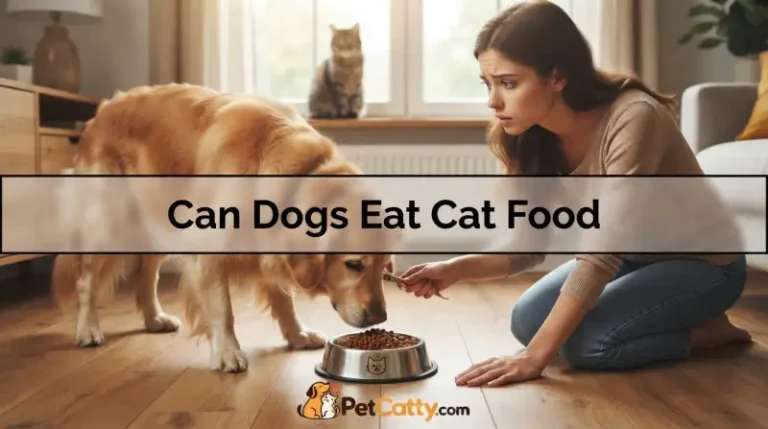
You caught your dog with his head in the cat’s bowl. Now you’re wondering: Is Cat Food Bad For Dogs? The short answer is yes, but the real story depends on how much and how often.
Read More: What Kind of Cat Do I Have? Find Out
Let’s break down what actually happens inside your dog’s body when he eats that high-protein, high-fat feline food.
According to AAFCO nutrient profiles, cat food typically contains 30 to 50 percent protein and 15 to 25 percent fat on a dry matter basis. Dog food averages 18 to 30 percent protein and 8 to 15 percent fat. Those numbers matter more than you might think.
Quick Answer
Cat food is bad for dogs when eaten regularly. It contains too much fat and protein. The calorie density is too high.
These differences can cause pancreatitis and obesity. An occasional small bite is rarely harmful. It should never replace a balanced dog diet.
Why This Matters for Your Dog’s Health
Dogs and cats have very different nutritional needs. Cat food is designed for an obligate carnivore. Dog food is designed for an omnivore.
That’s not just marketing talk. It’s biology.
When a dog eats cat food regularly, the body has to process a nutrient load it wasn’t built for. The pancreas gets overwhelmed by the fat. The kidneys work harder to filter excess protein.
Over time, the calorie surplus adds weight.
Pancreatitis is one of the most common and dangerous outcomes. It’s an inflammation of the pancreas that can be mild or life-threatening. Dogs with pancreatitis need hospitalization, IV fluids, and sometimes surgery.
The fat content in cat food triggers this condition more often than many owners realize.
Obesity is another serious risk. Cat food is calorie-dense. A small handful of dry cat food can contain as many calories as a full meal for a small dog.
That extra energy adds up quickly, especially for breeds prone to weight gain.
Then there’s the long-term nutritional imbalance. Cat food lacks the right balance of certain nutrients for dogs. It’s not toxic in the way chocolate or grapes are toxic.
But it’s not complete and balanced for canine health either.
What Makes Cat Food Different From Dog Food
If you look at the ingredient lists on a bag of cat food and a bag of dog food, they might look similar. Chicken, rice, corn, vitamins, minerals. But the proportions are completely different.
The FDA’s Center for Veterinary Medicine oversees pet food safety and recognizes that species-specific formulations are critical for health.
Protein and Fat: The Big Two Numbers
Cat food is much higher in protein and fat than dog food. Cats are obligate carnivores. They need more protein to survive.
Dogs are omnivores. They can thrive on a wider range of nutrients.
Here’s a quick comparison of typical dry food formulations:
| Nutrient | Cat Food (Dry) | Dog Food (Dry) |
|---|---|---|
| Crude protein | 30-50% | 18-30% |
| Crude fat | 15-25% | 8-15% |
| Fiber | 2-5% | 3-6% |
| Moisture | 6-10% | 6-10% |
| Calories per cup | 350-500 | 300-400 |
For a medium-sized dog, a single cup of average cat food contains about 100 more calories than a cup of dog food. That doesn’t sound like much. But over a week, it adds up to an extra 700 calories.
That’s like feeding your dog an extra meal every day.
Other Nutrient Differences That Matter
Taurine is an amino acid that cats must get from their diet. Dogs can synthesize taurine on their own. Cat food is supplemented with extra taurine.
That extra taurine doesn’t harm dogs. But it’s a sign of how differently these two species metabolize nutrients.
Vitamin A is another key difference. Cats need preformed vitamin A. Dogs can convert beta-carotene into vitamin A.
Cat food contains higher levels of preformed vitamin A. Too much vitamin A can cause toxicity in dogs over time.
Arachidonic acid is an omega-6 fatty acid. Cats need it in their diet. Dogs can produce it from other fatty acids.
Cat food contains more arachidonic acid than dog food. High levels may contribute to inflammation in dogs.
Why Dogs and Cats Process Fat Differently
The real issue comes down to how each species handles fat. Cats have a unique metabolism that processes high fat loads efficiently. Dogs do not.
The pancreas produces enzymes that break down fat. Dogs have a limited capacity for this. When a dog eats a high fat meal, the pancreas has to work overtime.
In some dogs, the enzyme production goes into overdrive. The pancreas becomes inflamed. That is pancreatitis.
Cats, by contrast, have a pancreas adapted to handle frequent high fat meals. Their enzyme production is more efficient. They rarely develop pancreatitis from dietary fat alone.
The gallbladder also plays a role. Bile helps digest fat. When a dog eats cat food, the gallbladder has to release more bile.
This can overwhelm the system. The excess bile can irritate the intestinal lining. That leads to diarrhea and vomiting.
What Happens When a Dog Eats Cat Food
The effects depend on several factors. How much cat food did the dog eat? How big is the dog?
Does the dog have any underlying health conditions?
The Immediate Problems
Within a few hours of eating cat food, many dogs develop digestive upset. The high fat content is hard to digest. The rich protein load can irritate the stomach.
Common symptoms include:
- Vomiting
- Diarrhea or loose stools
- Gas and bloating
- Abdominal discomfort
- Loss of appetite
These symptoms usually resolve within 24 to 48 hours. But they can be more severe in some dogs.
Pancreatitis is the bigger concern. Symptoms of pancreatitis include:
- Repeated vomiting
- Diarrhea
- A hunched back or “praying position” (front legs down, rear end up)
- Lethargy
- Fever
- Loss of appetite
- Dehydration
If you see these signs, call your vet immediately. Pancreatitis can progress quickly.
The Long-Term Problems
If a dog eats cat food regularly, the problems get worse. Chronic high fat intake can lead to obesity. Obesity leads to other health issues: joint problems, diabetes, heart disease, and reduced lifespan.
The high protein content puts strain on the kidneys. Dogs with kidney disease or reduced kidney function are especially vulnerable. The excess protein must be filtered and excreted.
Over time, this can accelerate kidney damage.
The liver also has to work harder. The liver processes fat and protein. A constant high-fat diet can lead to fatty liver disease.
This is more common in cats, but it can happen in dogs too.
Nutritional imbalances develop over months or years. Cat food doesn’t have the right balance of calcium and phosphorus for dogs. It also lacks the right ratio of omega-3 to omega-6 fatty acids.
These imbalances can affect bone health, skin condition, and immune function.
Why Some Dogs Are More at Risk
Not all dogs react the same way to cat food. Some can eat a whole bowl and show no symptoms. Others get sick from a few kibbles.
Breed matters. Some breeds are prone to pancreatitis. Miniature Schnauzers, Yorkshire Terriers, Cocker Spaniels, and Shetland Sheepdogs are at higher risk.
These breeds have a genetic predisposition. They should never eat cat food.
Size matters. Small dogs are more vulnerable to the effects of high fat and high protein. A single serving of cat food represents a larger percentage of their body weight.
A 10-pound dog that eats a quarter cup of cat food is getting a much bigger shock to the system than a 70-pound dog.
Age matters. Puppies have sensitive digestive systems. Senior dogs may have reduced kidney or liver function.
Both are more likely to have problems.
Health conditions matter. Dogs with kidney disease, diabetes, obesity, or a history of pancreatitis are at higher risk. These dogs should never eat cat food.
The Only Two Scenarios Where Cat Food Might Be Okay
There are very few situations where feeding cat food to a dog is acceptable. Here are the two exceptions. Both come with strict rules.
True Emergency: You’re Completely Out of Dog Food
If you run out of dog food and can’t get to a store, cat food is better than nothing. A single meal of cat food won’t harm most dogs. The key word is “most.”
Rules for emergency feeding:
- Feed only one meal
- Use the same portion size as you would for dog food
- Do not feed cat food for more than 24 hours
- Watch for any signs of digestive upset
- Switch back to dog food as soon as possible
This is not a recommendation. It’s a last resort. If you can get dog food, do that.
If you can’t, one meal of cat food is unlikely to cause serious harm.
As a Rare, Tiny Treat
Some owners use cat food as an occasional treat. This is not recommended by veterinarians. But if you choose to do it, follow these rules.
The treat rule applies to all treats: no more than 10 percent of daily calories. For a 30-pound dog, that’s about 20 to 30 calories. That’s roughly 5 to 7 pieces of dry cat food.
That’s not a handful. It’s a few kibbles. And it should not happen every day.
Even then, some dogs should never have cat food. Dogs with a history of pancreatitis, obesity, or kidney disease should avoid it entirely. Small dogs and high-risk breeds should also avoid it.
How to Handle Your Dog Eating Cat Food Right Now
You walk into the kitchen and find the cat’s bowl empty. Your dog is licking his chops with that guilty look. Now what?
If It Just Happened
If you caught your dog in the act, figure out how much he ate. Was it a few kibbles that fell on the floor? Or did he empty the entire bowl?
For a few kibbles, you can relax. Most dogs can handle that amount without any problems. Watch for any signs of digestive upset over the next 24 hours.
But chances are, nothing will happen.
For a larger amount, you need to make a judgment call. If your dog is a large breed with no health issues, a single serving of cat food is unlikely to cause serious harm. Feed his regular dog food at the next meal.
Keep an eye on him.
If your dog is small, a puppy, a senior, or has a known health condition, call your vet. Tell them how much cat food was eaten and the dog’s weight. They can advise you on whether to induce vomiting or simply monitor.
Do not induce vomiting unless your vet tells you to. Some dogs are sensitive to the process. And if the food has already been digested, vomiting won’t help.
If Your Dog Ate a Large Amount
A large amount means more than a single serving. Maybe your dog broke into a bag of cat food. Maybe he ate the cat’s entire supply for the week.
Here’s what to do step by step.
First, remove any remaining cat food from reach. You don’t want him eating more while you decide what to do.
Second, check the packaging. Look at the fat content. Some cat foods are extremely high in fat.
Those are more likely to cause pancreatitis. Note the brand and formula so you can tell your vet.
Third, call your veterinarian. Even if your dog seems fine right now, a large amount of cat food can cause delayed symptoms. Your vet may want to see your dog for a checkup.
Fourth, monitor for symptoms over the next 48 hours. Write down anything you notice. Vomiting, diarrhea, lethargy, or loss of appetite are all red flags.
Fifth, do not feed your dog anything for the next 12 to 24 hours. Give his digestive system time to process the cat food. Offer plenty of fresh water.
If your dog is acting normal after 24 hours, you can slowly reintroduce his regular food. Start with a small portion. Watch for any signs of upset.
Signs You Need to Call the Vet Immediately
Some symptoms require urgent veterinary care. If you see any of these signs, do not wait. Call your vet or an emergency animal hospital right away.
- Repeated vomiting that doesn’t stop
- Dry heaving or retching without producing anything
- Severe diarrhea that is watery or bloody
- A hunched back or “praying position” that lasts more than a few minutes
- Extreme lethargy or weakness
- Abdominal pain or bloating
- Difficulty breathing
- Collapse or loss of consciousness
These symptoms could indicate pancreatitis, a gastrointestinal obstruction, or another serious condition. Do not try to treat these at home. Your dog needs professional medical care.
How to Prevent This From Happening Again
Prevention is much easier than treatment. Once you know your dog has a taste for cat food, you need to change the environment.
Feeding Station Strategies
The simplest solution is to feed your cat in a place your dog cannot reach. Elevated feeding stations work well for cats. Place the cat’s food bowl on a counter, table, or shelf that your dog cannot access.
Cats are natural jumpers. Most dogs cannot reach them.
If your cat is elderly or has mobility issues, consider a microchip-activated feeder. These devices only open for the cat’s microchip. The dog can sniff all he wants, but the lid stays closed.
As of 2026, these feeders range from about $150 to $300. The investment is worth it if you have a persistent dog.
Another option is a baby gate with a small cat door built in. The cat can slip through. The dog cannot.
This works well if you can dedicate one room or area for the cat’s food.
Timed feeding also helps. Instead of leaving food out all day, feed your cat at specific times. Remove the bowl after 15 to 20 minutes.
This prevents grazing and eliminates the temptation for your dog.
What to Do With a Counter-Surfing Dog
Some dogs are determined. They will jump on counters, open cabinets, and break into bags of cat food. These dogs need extra management.
First, never leave cat food out on the counter. Not even for a minute. A determined dog only needs a second to grab a mouthful.
Second, store cat food in sealed containers. Plastic bins, metal cans, or locking pet food storage containers work well. Dogs can tear open bags.
They cannot open a properly sealed container.
Third, use positive reinforcement training. Teach your dog to leave the cat’s food alone. Every time he ignores the cat’s bowl, give him a treat.
This takes time and consistency. But it works.
The Hidden Dangers of Free-Feeding Cats
Free feeding is common among cat owners. You leave a bowl of dry food out all day. The cat eats when he wants.
This is convenient. But it is a major risk in multi-pet homes.
Free feeding means the cat’s food is always available. Your dog can access it at any time. Even if you think your dog cannot reach it, dogs are resourceful.
A dog that free feeds on cat food is eating multiple small meals throughout the day. This is worse than a single large meal. The constant intake of high fat food keeps the pancreas working nonstop.
Free feeding also makes it hard to monitor how much cat food your dog is eating. You might not notice for days or weeks. By then, your dog could be gaining weight or developing health problems.
The microchip feeder is the best solution for free-fed cats. If you cannot afford one, switch to scheduled feeding. Your cat will adapt to the new schedule within a few days.
Common Mistakes Owners Make
Even after reading the warnings, many owners still make mistakes. Here are the most common ones. Avoid these and your dog stays safer.
Mistake #1: Thinking a Little Bit Won’t Hurt
This is the most dangerous mindset. “A few kibbles here and there. What’s the harm?” The problem is that “a few kibbles” adds up quickly.
Let’s say you give your dog five pieces of cat food as a treat every day. That’s maybe 15 to 20 calories. Not a lot.
But over a month, that’s 450 to 600 extra calories. That’s like adding an extra meal.
For a small dog, that daily treat can lead to weight gain over time. For a dog prone to pancreatitis, even a few kibbles can trigger an attack.
Mistake #2: Panicking Over a Single Kibble
While some owners are too casual, others panic over nothing. A single piece of cat food is not going to harm your dog. Really.
It’s not toxic. It’s not dangerous.
If your dog eats one or two pieces of cat food, do nothing. Watch him. He’ll be fine.
Save your concern for the bigger incidents.
Mistake #3: Using Cat Food to Hide Pills
This is a surprisingly common tactic. Cat food is smelly and tasty. Dogs love it.
So owners use it to hide medication.
Do not do this. The medication schedule might require daily use. That means your dog gets cat food every day.
That’s no longer occasional. That’s a habit.
Use pill pockets, cheese, peanut butter, or commercial dog treats instead. These are designed for dogs. They are not going to cause health issues.
Mistake #4: Assuming Expensive Cat Food Is Safer
Some owners think premium or grain-free cat food is better for their dog. It’s not. The nutritional profile is still wrong.
Expensive cat food is still cat food.
In fact, premium cat food is often higher in protein and fat than budget brands. That means it’s even riskier for dogs. The fat content can be as high as 30 to 40 percent.
The price tag does not change the biology. Your dog is still getting a meal designed for a cat.
Mistake #5: Assuming Wet Cat Food Is Safer Than Dry
Another common belief is that wet cat food is safer because it has more moisture. That’s not accurate. Wet cat food is still formulated for cats.
It is still high in protein and fat.
In some ways, wet cat food is riskier. It’s more palatable. Dogs are more likely to gobble it up quickly.
And it often has even higher fat content than dry formulas.
The same rules apply to wet cat food. An occasional small amount is unlikely to cause harm. But it should not become a regular part of your dog’s diet.
What About Other Animals’ Food?
If you have other pets, you might wonder about their food too. The same principle applies. Each species has unique nutritional needs.
Their food is formulated for them, not for your dog.
Rabbit food is high in fiber and low in protein. That’s fine for a rabbit. It’s not harmful to a dog in small amounts.
But it won’t provide balanced nutrition either.
Ferret food is similar to cat food. Ferrets are obligate carnivores too. Their food is high in protein and fat.
It’s not good for dogs for the same reasons.
Horse feed is mostly hay, grains, and supplements. It is not toxic to dogs. But it’s not nutritionally balanced.
Large amounts can cause digestive upset.
Fish food is small and concentrated. It might contain ingredients not ideal for dogs. But a few pellets that fall on the floor are not going to cause harm.
The pattern is consistent. Stick to species-specific food for each animal. If a dog eats another animal’s food occasionally, it’s usually not an emergency.
But it should not become a habit.
How to Help Your Dog Recover After Eating Cat Food
If your dog has vomiting or diarrhea after eating cat food, here is a practical recovery plan.
The 24 Hour Reset
Start with a 24 hour fast. Do not feed any food for 12 to 24 hours. Offer plenty of fresh water.
The digestive system needs time to clear out the cat food.
After the fast, introduce a bland diet. Boiled white rice and boiled chicken breast (skinless, boneless) work well. Mix them in equal parts.
Feed small portions every 4 to 6 hours.
Do not add any oils, butter, or seasonings. The goal is to give the digestive system a break. Keep the meals small and simple.
The Gradual Transition Back to Regular Food
After 24 to 48 hours on the bland diet, start mixing in your dog’s regular food. Use a ratio of 75 percent bland diet to 25 percent regular food for the first meal.
If that goes well, increase to 50 percent each for the next meal. Then 25 percent bland to 75 percent regular. Finally, return to 100 percent regular food.
If at any point the vomiting or diarrhea returns, go back to the bland diet. Wait another 24 hours. Then try the transition again more slowly.
When to Use Probiotics
Probiotics can help restore the balance of gut bacteria after a dietary upset. They are available as powders, capsules, or chews. Look for products specifically formulated for dogs.
Human probiotics are not recommended. The bacterial strains are different. Dog-specific probiotics contain strains that are beneficial for canine digestion.
Probiotics are not a substitute for veterinary care. But they can help speed up recovery. Use them as directed on the packaging.
Signs That Recovery Is Not Working
If your dog is not improving after 48 hours of a bland diet, call your vet. Persistent vomiting or diarrhea can lead to dehydration. Dehydration is dangerous for dogs.
Other signs that recovery is not working include:
- Continued lethargy
- Refusal to eat the bland diet
- Blood in the stool or vomit
- Signs of abdominal pain
- Fever
These symptoms may indicate a more serious condition. Your vet may need to run tests. They may prescribe medication to control vomiting or diarrhea.
How to Choose Safe Treats Your Dog Will Love
If you have been using cat food as a treat, now is the time to switch. There are many safe alternatives. Your dog will love them just as much.
The Best Commercial Dog Treats
Look for treats that are low in fat and calories. Single ingredient treats are a good option. Freeze-dried liver, chicken, or beef are popular choices.
They are high in protein but low in fat.
Avoid treats that list “animal fat” or “poultry fat” as a main ingredient. These are high in saturated fat. They can cause the same problems as cat food.
Also avoid treats that are high in sugar. Some commercial treats use sugar, molasses, or corn syrup as flavor enhancers. These are unnecessary and unhealthy.
The Best Human Food Treats
Many human foods are safe for dogs. They make excellent treats. Here are some of the best options.
- Cooked chicken breast. Plain, skinless, boneless. Cut into small pieces.
- Cooked lean beef or turkey. No seasoning. No fat.
- Carrots. Raw or steamed. Crunchy and low in calories.
- Green beans. Raw or steamed. No salt.
- Blueberries. Fresh or frozen. Full of antioxidants.
- Apple slices. Remove the seeds and core.
- Plain pumpkin puree. Not pumpkin pie filling. High in fiber.
- Plain yogurt. No sugar. No artificial sweeteners. Good source of probiotics.
These foods are safe in moderation. They should not make up more than 10 percent of your dog’s daily calories.
Treats to Avoid
Some human foods are toxic to dogs. Never give these as treats.
- Grapes and raisins. Can cause kidney failure.
- Onions and garlic. Can damage red blood cells.
- Chocolate. Contains theobromine, which is toxic.
- Xylitol. An artificial sweetener found in sugar-free gum and candy. Causes rapid insulin release and liver failure.
- Macadamia nuts. Can cause weakness, vomiting, and hyperthermia.
- Avocado. Contains persin, which can cause vomiting and diarrhea.
Always check before giving your dog a new food. When in doubt, stick with dog-specific treats.
When to See a Vet
Knowing when to call the vet is just as important as preventing the problem. Some situations are clear emergencies. Others are more subtle.
The Emergency List: Call Now
Call your vet or an emergency animal hospital immediately if you see any of these signs. Do not wait. Do not try home remedies.
- Repeated vomiting that continues for more than two hours
- Vomiting blood or material that looks like coffee grounds
- Severe diarrhea that is watery, frequent, or contains blood
- A hunched back or “praying position” that lasts more than a few minutes
- Extreme lethargy or weakness where the dog cannot stand or walk normally
- Swollen or painful abdomen
- Difficulty breathing or rapid shallow breathing
- Collapse or loss of consciousness
- Seizures
- Signs of dehydration such as dry gums, sunken eyes, or skin that stays tented when pinched
Pancreatitis can cause all of these symptoms. It can progress from mild to severe within hours. Do not gamble with your dog’s health.
The “Call Your Regular Vet” List
Some situations are not emergencies but still need veterinary attention. Call your regular vet during office hours if you notice these signs.
- Your dog vomited once or twice but seems otherwise fine
- Your dog has loose stools but is still eating and drinking normally
- Your dog seems tired or less active than usual
- Your dog has a decreased appetite for more than 24 hours
- Your dog has a history of pancreatitis or other health conditions and ate cat food
Your vet can advise you over the phone. They might tell you to monitor at home. They might ask you to bring your dog in for a checkup.
Trust their judgment.
What to Tell the Vet
When you call, the vet will need specific information. Have this ready before you dial.
First, the dog’s details. Tell them your dog’s breed, age, weight, and any known health conditions. The vet needs to know if your dog is a high-risk breed for pancreatitis.
Second, the cat food details. Tell them how much cat food was eaten. Estimate if you need to.
Say “about half a cup” or “maybe a full bowl.” Also tell them the brand and formula if you know it. High-fat formulas are more concerning.
Third, the timing. Tell them when the cat food was eaten. Was it 10 minutes ago?
Two hours ago? Overnight? The timeline helps the vet decide what to do.
Fourth, the symptoms. Describe any symptoms you have seen. Be specific.
Say “he vomited twice in the last hour” rather than “he threw up a little.”
Fifth, any actions you have taken. Tell them if you gave your dog any food, water, or medication. Tell them if you tried to induce vomiting.
The more information you provide, the better the vet can advise you.
What Happens at the Vet
If you bring your dog in, the vet will do a physical exam. They will check for signs of dehydration, abdominal pain, and fever. They may recommend blood tests to check pancreatic enzyme levels.
A diagnosis of pancreatitis is confirmed with a blood test called a pancreatic lipase immunoreactivity test. This test measures the level of pancreatic enzymes in the blood. High levels indicate inflammation.
Treatment depends on the severity. Mild cases may only need supportive care. Fluids, anti-nausea medication, and a low-fat diet for a few days.
Severe cases require hospitalization. IV fluids, pain management, and sometimes antibiotics.
Most dogs recover fully from a single episode of pancreatitis. But repeated episodes can cause permanent damage. The pancreas may not function properly after multiple attacks.
This can lead to digestive issues and diabetes.
The Bottom Line: One Clear Rule, One Rare Exception
Here is the simplest way to think about this. Cat food is not formulated for dogs. It is too high in fat, protein, and calories.
It can cause pancreatitis, obesity, and long-term nutritional imbalances. The safest approach is to never feed cat food to your dog.
The one clear rule is this: cat food is for cats. Dog food is for dogs. Keep them separate.
Do not let your dog have access to the cat’s food. That is the only way to guarantee safety.
The one rare exception is a true emergency. If you are completely out of dog food and cannot get to a store, one meal of cat food will not harm most dogs. But that is a last resort.
It is not a habit. It is not a treat.
If you want to give your dog a special snack, there are better options. Small pieces of cooked chicken, carrots, green beans, or commercial dog treats are all safe. They are designed for dogs.
They will not cause health problems.
The bottom line is simple. Protect your dog’s health by keeping cat food out of reach. If an accident happens, stay calm.
Assess the situation. Call your vet if you are worried. Most dogs will be fine after a single incident.
But the best approach is to prevent it from happening in the first place.
Frequently Asked Questions
Can a single piece of cat food hurt my dog?
No. A single piece of dry cat food is not toxic. It will not cause pancreatitis or any other serious problem.
Your dog’s digestive system can handle a tiny amount. You do not need to call the vet or induce vomiting. Just watch for any unusual symptoms over the next 24 hours.
How much cat food is too much for a dog?
There is no exact number. It depends on the dog’s size, breed, and health. A general rule is that any amount over 10 percent of daily calories is too much.
For a 30-pound dog, that is about 20 to 30 calories. That equals roughly 5 to 7 pieces of dry cat food. More than that increases the risk of digestive upset and pancreatitis.
What are the symptoms of pancreatitis in dogs?
The most common symptoms are vomiting, diarrhea, loss of appetite, and a hunched back. Dogs with pancreatitis often appear lethargic. They may have a fever.
Some dogs show signs of abdominal pain. If you see these symptoms after your dog ate cat food, call your vet immediately. Pancreatitis can be serious.
Is wet cat food safer for dogs than dry cat food?
No. Wet cat food is still formulated for cats. It is still high in protein and fat.
In some cases, wet cat food has even higher fat content than dry formulas. It is also more palatable, which means dogs are more likely to eat it quickly. The same rules apply.
An occasional small amount is unlikely to cause harm. Regular feeding is not safe.
Can puppies eat cat food?
Puppies should not eat cat food. Their digestive systems are still developing. The high fat and protein content can cause severe digestive upset.
Puppies are also more prone to obesity and growth issues. If a puppy eats cat food, monitor closely. Call your vet if you see any signs of vomiting or diarrhea.
What should I do if my dog ate a whole bag of cat food?
This is a serious situation. Remove any remaining cat food. Call your veterinarian immediately.
Tell them how much was eaten, the dog’s weight, and the brand of cat food. They may ask you to bring your dog in for evaluation. Monitor for symptoms over the next 48 hours.
Do not induce vomiting unless your vet instructs you to.
Can I mix cat food with dog food to make it tastier?
No. Mixing cat food with dog food is not a good idea. It dilutes the nutritional balance of the dog food.
It adds extra fat and protein that your dog does not need. If your dog is a picky eater, try adding warm water, low-sodium broth, or a small amount of plain pumpkin puree to their dog food. These are safer options.
Are there any dog breeds that should never eat cat food?
Yes. Breeds prone to pancreatitis should never eat cat food. These include Miniature Schnauzers, Yorkshire Terriers, Cocker Spaniels, and Shetland Sheepdogs.
Any dog with a history of pancreatitis, obesity, kidney disease, or diabetes should also avoid cat food. Small dogs are at higher risk due to their size.
How long does it take for a dog to recover from eating cat food?
Most dogs recover within 24 to 48 hours after a single incident. Mild digestive upset usually resolves on its own. If your dog develops pancreatitis, recovery can take longer.
Mild cases may need a few days of supportive care. Severe cases may require hospitalization for several days.
Can I use cat food as a training treat for my dog?
No. Cat food is not a suitable training treat. It is too high in fat and calories.
There are many safe alternatives. Small pieces of cooked chicken, cheese, or commercial dog training treats work well. They are designed for dogs and will not cause health problems.
Stick with dog-specific treats for training.