If you've ever sat down only to have your cat climb onto your chest and settle in like you're a piece of furniture, you've probably wondered "why does my cat lay on me." It's one of the most common questions cat owners ask. And the answer isn't always as simple as "they love you." Sometimes it is affection. Other times, it's a sign of something deeper.
The truth is, your cat's decision to use you as a bed is driven by a mix of instinct, biology, and emotional need. As of 2026, veterinary behaviorists at the Cornell Feline Health Center have identified several distinct motivations behind this behavior. Understanding which one applies to your cat can tell you a lot about their health, trust level, and emotional state.
Let's walk through the real reasons together.
Quick Answer
Your cat lays on you for warmth, security, and scent marking. They trust you enough to be vulnerable. The purring lowers your stress and theirs.
But sudden changes in this behavior can signal pain or illness. Watch for other body language clues.
The Real Reasons Cats Choose You as Their Bed
There's rarely just one reason a cat picks you as their sleeping spot. Most of the time, it's a combination of factors. Let's break down the main drivers.
Warmth & Comfort
Cats run hot. Their natural body temperature sits between 100.5 and 102.5 degrees Fahrenheit. That's a few degrees warmer than your own 97 to 99 degrees.
Your body radiates heat, and your cat knows it. When they curl up on your chest or lap, they're using you as a living heating pad.
This is especially common in colder months. If your cat's cuddling increases during winter or when the air conditioning is on, warmth is likely the primary driver. Kittens and senior cats are particularly drawn to body heat.
They have a harder time regulating their own temperature.
But there's more to it than thermoregulation. The rhythmic rise and fall of your breathing, the steady thump of your heartbeat, and the soft warmth of your skin create a sensory environment that mimics the comfort of their mother's body. For a cat, that combination is deeply calming.
Scent Marking & Territory
Cats are territorial animals. They communicate largely through scent. Your cat has scent glands on their cheeks, paws, forehead, and the base of their tail.
When they knead on you, rub their face against you, or settle in for a nap, they're depositing their pheromones onto your skin and clothing.
This isn't just affection. It's a claim. By marking you with their scent, your cat is telling other animals, "this human belongs to me." In multi-cat households, you might notice this behavior intensifies after a new cat arrives or after you've been away.
Your cat is reasserting ownership.
It's also a two-way street. Your scent is familiar to them. Being close to your smell provides comfort and reduces anxiety.
Think of it as your cat's way of putting their favorite blanket over themselves.
Trust & Bonding
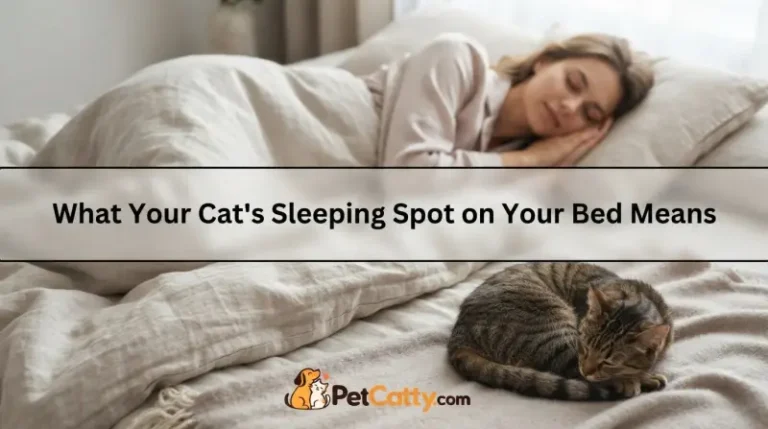
Sleeping is the most vulnerable thing a cat does. In the wild, a cat would never let its guard down around a predator or a threat. When your cat chooses to sleep on you, they are making a conscious decision to trust you with their safety.
This is a huge deal in cat language. It means they see you as part of their inner circle. Their colony.
The bond that forms through this shared rest releases oxytocin in both of you. That's the same hormone that bonds mothers to their babies.
Cats that have been hand-raised or adopted as kittens are more likely to display this level of trust. But even shy cats can develop it over time with patience and consistency.
The Sound of Your Heartbeat & Breathing
There's a reason cats often prefer the chest over the lap. Your heartbeat is a steady, rhythmic sound. It falls within a frequency range cats find soothing.
The purring frequency of 25 to 150 Hertz is known to have healing properties for both cats and humans. It reduces stress and lowers blood pressure.
When your cat lies on your chest, they're not just listening to your heart. They're feeling the gentle rise and fall of your lungs. That motion mimics the breathing of another cat.
It signals that everything is calm and safe.
Some cats will even adjust their own breathing to match yours. If you've noticed your cat's breathing slow down and sync with yours after a few minutes, that's what's happening. It's a subtle form of empathy and connection.
When It's a Sign of Health Issues (Don't Ignore These)
Here's where things get serious. For every sweet, affectionate reason your cat might lay on you, there's a potential health concern that looks similar on the surface. You need to know the difference.
Pain or Illness Hiding Behind Cuddles
Cats are masters of hiding pain. It's an evolutionary survival instinct. In the wild, showing weakness makes you a target.
So when a cat is hurting, they often withdraw and hide. But some cats do the opposite. They seek out their owner's warmth and comfort.
They feel vulnerable and need reassurance.
This is especially common in cats with arthritis, dental pain, or gastrointestinal issues. The cat might be seeking heat to soothe sore joints. Or the comfort of your presence because they feel unwell.
Signs that cuddling may be pain-related:
| Normal Cuddling | Potential Red Flag |
|---|---|
| Purrs contentedly, relaxed body | Purrs but muscles feel tense or rigid |
| Eyes half-closed, slow blinks | Eyes wide, pupils dilated, or squinting |
| Body loose, paws tucked | Body hunched, flinching when touched |
| Stays in one position comfortably | Shifts position frequently, seems restless |
| Jumps up on you willingly | Hesitates before jumping or climbing |
If your cat has suddenly become more clingy and is also showing signs of lethargy, hiding, or changes in appetite, a vet visit is warranted. Don't assume it's just affection.
Anxiety and Stress Clinginess
Cats are creatures of habit. Any change in their environment can trigger anxiety. This includes moving to a new home, adding a new pet or family member, changes in your work schedule, or even rearranging furniture.
An anxious cat might become unusually clingy. They'll follow you from room to room and insist on being on your lap or chest. This is called "velcro cat" behavior.
It looks like affection, but it's actually a cry for help.
Common anxiety triggers that increase cuddling:
- Moving to a new house
- A new baby or pet in the home
- Loud construction or fireworks
- Changes in your daily routine
- The loss of a companion animal
The difference between anxious cuddling and relaxed cuddling is in the body language. An anxious cat will have tense muscles, flattened ears, a twitching tail, and dilated pupils. They may also knead excessively or suckle on fabric.
If you see these signs, address the underlying stressor.
Hyperthyroidism and Other Medical Clues
Hyperthyroidism is one of the most common endocrine disorders in middle-aged and older cats. It causes an overactive metabolism. This leads to weight loss, increased appetite, restlessness, and sometimes increased vocalization.
But here's the counterintuitive part. Some hyperthyroid cats become more affectionate and clingy. They may seek out warmth and comfort because their body is in a constant state of metabolic stress.
The increased appetite and weight loss combined with clingy behavior is a classic red flag.
Other medical conditions that can cause clingy behavior:
- Kidney disease (often leads to lethargy and seeking warmth)
- Diabetes (can cause weakness and hunger)
- High blood pressure (can cause confusion and disorientation)
- Feline cognitive dysfunction (senior cat dementia, leads to confusion)
If your cat is over 10 years old and has suddenly become more clingy, schedule a senior wellness check. A simple blood test can rule out many of these conditions.
How to Tell the Difference: Normal vs. Concerning Behavior
This is the most important skill you can develop as a cat owner. The ability to read your cat's body language and context determines whether you enjoy the cuddle or head to the vet.
Body Language Red Flags
A relaxed, happy cat has a specific look. Their eyes are half-closed with slow blinks. Their ears are forward or slightly to the side.
Their tail is still or gently curled. Their body feels soft and loose, like a warm bag of sand.
A cat that is cuddling because of pain or anxiety will look different.
Body language checklist for concerning cuddling:
- Flattened ears: If the ears are pinned back or to the side, the cat is not relaxed.
- Dilated pupils: Big, dark pupils in a well-lit room signal stress or fear.
- Tense muscles: The cat feels rigid, not soft. They may flinch if you touch a specific area.
- Tail twitching: A rapidly twitching or thumping tail while lying on you is a sign of irritation or overstimulation.
- Excessive drooling: While some cats drool when happy, sudden drooling can indicate nausea or dental pain.
- Growling or hissing: If your cat seems to want to be close but then growls when touched, they are conflicted. They want comfort but are in pain.
When to Watch the Clock (Sudden vs. Consistent Change)
The timeline matters. A cat that has always been a lap cat is different from a cat that suddenly becomes one.
Sudden change (days to a week): This is the most concerning pattern. A cat that was previously independent and now won't leave your side is trying to tell you something. Rule out medical issues first.
If the vet clears them, look for environmental stressors.
Gradual change (weeks to months): This is more likely a normal developmental shift. As cats age, they often become more affectionate. Senior cats particularly seek warmth and comfort.
This is usually not a medical emergency, but it's worth monitoring.
Consistent pattern (always been this way): Some cats are simply cuddly by nature. If you've had your cat for years and they've always been a lap cat, you're probably fine. Enjoy it.
The best approach is to keep a simple mental log. If your cat's behavior changes significantly, note when it started and what else was happening in their life. That information is invaluable for your vet.
Common Mistakes Owners Make When Interpreting This Behavior
We all want to believe our cats love us. And they do. But sometimes our desire to see affection blinds us to real problems.
Mistake 1: Assuming all cuddling is affection. It's the most common error. We see a cat on our lap and we think "they love me." Sometimes they do. Sometimes they're cold, anxious, or in pain.
Always consider the full picture.
Mistake 2: Ignoring other body language. A cat can be on your lap and still be stressed. If you ignore the flattened ears and the twitching tail, you might miss the warning signs. Learn to read your cat's whole body, not just their location.
Mistake 3: Pushing a cat away when they need comfort. If your cat is anxious or unwell, pushing them away can make things worse. Instead, provide a calm, safe space. Let them stay close if they want to.
But also offer a warm bed or blanket nearby.
Mistake 4: Not recognizing the "trap" in multi-cat households. Some cats lay on you specifically to block other cats from approaching. This is "resource guarding" behavior. It's not affection.
It's competition. If you have multiple cats, watch for hissing, growling, or swatting when another cat comes near.
Mistake 5: Assuming a change in behavior is just a phase. Cats don't do things for no reason. A sudden change in cuddling habits, whether more or less, is always worth investigating. It's better to be safe than sorry.
Multi-Cat Households: Is It Claiming or Real Affection?
If you have more than one cat, the dynamics change. Your cat might be laying on you to claim you, not to bond with you.
Resource guarding in action: In multi-cat homes, your lap becomes a valuable resource. It's warm, comfortable, and close to you. A cat that guards you from other cats will hiss, swat, or growl when another cat approaches.
They might also glare at the other cat while staying put on your chest.
How to tell the difference:
| Guarding Behavior | Affectionate Behavior |
|---|---|
| Hisses when other cat approaches | Ignores or tolerates other cats |
| Body tenses when another cat enters the room | Body stays relaxed |
| Eyes track the other cat constantly | Eyes closed or relaxed |
| Leaves when the other cat leaves | Stays regardless of what other cats do |
What to do: If you suspect guarding, don't force the issue. Let the guarding cat have their time with you. Then give the other cat attention separately.
This reduces competition and tension over time.
Breed Tendencies: Some Cats Are Just More Cuddly
Not all cats are created equal when it comes to lap time. Breed plays a significant role in how likely a cat is to lay on you.
Lap Cat Breeds vs. Independent Breeds
Breeds known for high cuddle potential:
- Ragdoll: Known for going limp when held. They follow their owners from room to room.
- Persian: Low energy, enjoys lounging on laps for hours.
- Maine Coon: Gentle giants. They're affectionate but not demanding.
- Sphynx: They need body heat. They'll seek you out constantly.
- Burmese: Extremely people-oriented. They crave physical contact.
Breeds that are more independent:
- Russian Blue: Affectionate but reserved. They prefer to sit near you, not on you.
- Bengal: High energy. They'd rather play than cuddle.
- Scottish Fold: Sweet but often prefer sitting beside you rather than on you.
- Siamese: They're vocal and social, but many prefer a perch on your shoulder over your lap.
Mixed breeds: Most cats are mixed breeds. Their personality depends on their individual history and socialization. A shelter cat that was handled as a kitten is more likely to be a lap cat than one that was feral.
Practical Tips for Managing the Behavior (When You Need Space)
Let's be honest. Sometimes you need to work, eat, or just breathe without a cat on your chest. Here's how to manage the situation without damaging your bond.
Provide alternative warm spots:
- A heated cat bed near your desk
- A soft blanket on the couch right next to you
- A cat tree in the sunniest window
- A microwavable heating pad wrapped in a towel
Redirect gently:
- When you need to move, pick your cat up and place them on the warm alternative spot
- Pet them for a minute before you move to soften the transition
- Use a treat or toy to lure them off you rather than pushing them
Set boundaries consistently:
- Decide which chairs or times are off limits
- Stick to the rules so your cat learns the pattern
- Don't let them on your lap one day and then scold them the next
Use a "place" command:
- Train your cat to go to a specific bed or mat on cue
- Reward them with a treat when they settle there
- Start with short sessions and build up
When to See a Veterinarian or Behaviorist
You don't need to run to the vet every time your cat curls up on you. But there are clear signs that warrant a professional opinion.
See a veterinarian if:
- Cuddling increased suddenly and your cat is over 10 years old
- Your cat is also losing weight despite eating normally
- You notice limping, stiffness, or reluctance to jump
- Your cat is drooling excessively or has bad breath
- Your cat is vomiting or has diarrhea alongside the clinginess
- Your cat seems confused or disoriented at night
See a veterinary behaviorist if:
- Your cat is aggressive when cuddling (biting, hissing, swatting)
- The clinginess is causing stress for you or other pets
- Your cat has separation anxiety when you leave
- You've ruled out medical causes and the behavior persists
A good starting point is your regular vet. They can run blood work and a physical exam. If they find nothing wrong, they can refer you to a behaviorist.
Real Scenario Examples (What Each Pattern Could Mean)
Scenario 1: The New Kitten Cuddle
Luna, a 4-month-old kitten, follows you everywhere. She climbs onto your chest the moment you sit down. She kneads and purrs loudly.
What it means: She's bonding. Kittens who are handled early learn that humans are safe. She's also seeking warmth because kittens lose heat faster than adults.
This is normal and healthy.
Scenario 2: The Senior Cat Shift
Mittens, a 14-year-old cat, used to sleep at the foot of the bed. Now she insists on lying on your chest every night. She's also drinking more water and has lost weight.
What it means: This is a red flag. The combination of increased clinginess, weight loss, and increased thirst points to hyperthyroidism or kidney disease. A vet visit is urgent.
Scenario 3: The Post-Move Cling
Oliver, a 3-year-old cat, was independent before you moved apartments. Now he won't let you out of his sight. He cries when you close the bathroom door.
What it means: Anxiety. The move disrupted his territory. He's seeking reassurance from you.
Give him extra attention, use pheromone diffusers, and create a consistent routine. He should settle in a few weeks.
Scenario 4: The Multi-Cat Standoff
You have two cats. One lies on your chest. The other approaches.
The first cat hisses and swats. The second cat backs away.
What it means: Resource guarding. The cat on your chest sees you as a resource to be protected. This isn't affection.
It's competition. Work on separate bonding time with each cat.
Frequently Asked Questions
Why does my cat lay on my chest?
Your cat is drawn to your heartbeat and breathing rhythm. These sounds are soothing and remind them of safety. The warmth of your chest also provides comfort, especially in cooler weather.
It's a sign of deep trust.
Why does my cat lay on my head at night?
Cats are drawn to the warmest spot. Your head radiates significant heat. The scent of your hair and scalp is also familiar.
Some cats find the sound of breathing near the pillow comforting. It's a combination of warmth and familiarity.
Why does my cat suddenly stop laying on me?
Sudden withdrawal can signal pain, stress, or illness. It can also be a response to a change in your scent or routine. If the behavior change is accompanied by hiding, loss of appetite, or aggression, see a vet.
Why does my cat knead on me before laying down?
Kneading is a leftover behavior from kittenhood. Kittens knead their mother's belly to stimulate milk flow. Adult cats knead when they feel safe and content.
It's a sign of comfort and trust.
Is it safe to let my cat sleep on my chest?
For most healthy adults, yes. But be aware of your cat's weight. A heavy cat can restrict breathing if they lie directly on your sternum.
If you have asthma or allergies, close contact may trigger symptoms. Keep the bedroom well ventilated.
Why does my cat only lay on me when I'm sick?
Cats can detect changes in your body temperature and scent. When you're sick, your body temperature may rise. Your scent changes slightly.
Your cat may also sense your reduced activity level. They're drawn to your vulnerability and warmth.
Final Takeaway: Trust Your Gut, but Watch the Signs
Your cat laying on you is usually a good thing. It means trust, comfort, and affection. But it's not always that simple.
The key is context. A cat that has always been cuddly is probably fine. A cat that suddenly becomes clingy needs attention.
A cat that cuddles but shows tense body language is stressed or in pain.
Learn to read your cat's whole body. Watch for changes in their habits. Trust your instincts.
And when in doubt, a quick vet visit can give you peace of mind.
Your cat chose you for a reason. Enjoy the cuddles. Just keep your eyes open for the signs that matter.