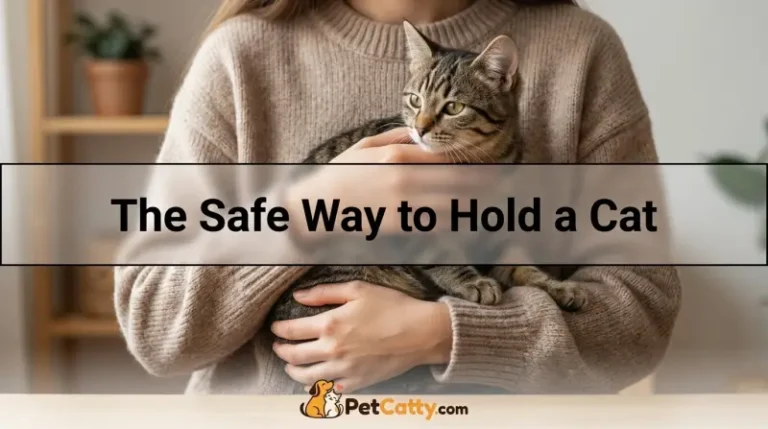
You've probably seen someone scoop up a cat by the scruff or grab it under the front legs and wonder why the cat fought back. Learning how to pick up a cat the right way makes a world of difference for both of you. It's not just about technique.
It's about safety, trust, and understanding what your cat is actually feeling.
Per the handling guidelines from the American Association of Feline Practitioners (AAFP), improper lifting causes more than 40% of handling-related injuries in cats. A few simple changes can prevent those injuries and build a stronger bond with your cat.
Quick Answer
Support the chest and hindquarters. Keep the cat's spine horizontal. Never lift by the front legs or scruff.
Read the cat's body language first. Set down gently if the cat struggles.
Why Picking Up a Cat the Wrong Way Hurts Both of You
A cat's body isn't built like a dog's. Their spine is more flexible, but their shoulder joints are fragile. When you lift a cat by the front legs, you pull the entire weight of the torso through two small joints.
That can cause a shoulder dislocation or a sprained elbow. It's a common reason cats resist being picked up. They've learned it hurts.
The same goes for scruffing an adult cat. Many people remember seeing mother cats carry kittens by the scruff. But that instinct to go limp only works for kittens under six weeks old.
An adult cat's scruff is a thick, sensitive area of skin. Lifting an adult by the scruff triggers pain and fear. The AAFP guidelines state that scruffing should never be used as a routine restraint technique for adult cats.
It's a painful and outdated practice.
Then there's the human side. A cat that panics mid-air will twist, claw, and bite to get free. Those scratches can get infected.
A bite from a frightened cat can puncture deep. If you drop a cat from chest height, that's a fall of three to four feet. A fall from that height can cause a fractured leg, a broken jaw, or internal injuries.
Picking up a cat the wrong way also damages trust. One bad experience can set back your relationship for weeks. Cats remember negative handling.
They'll avoid you, hide, or swat before you even get close. That's why getting the technique right from the start is so important.
The One Rule You Should Never Break (Support the Hindquarters)
Here's the single most important rule in cat handling. Always support the hindquarters. No exceptions.
Think about how a cat stands. Their center of mass is in the middle of their body. If you lift only the front half, the back half hangs down.
That puts strain on the lumbar spine. It also makes the cat feel unstable. A cat that feels unstable will try to dig its claws into anything solid.
Usually your arm.
When you support the hindquarters, you give the cat a solid base. Their back legs rest on your hand or forearm. Their spine stays roughly horizontal.
The cat feels grounded and secure. That's the difference between a cat that relaxes in your arms and a cat that kicks and scrambles.
The rule applies to every cat, regardless of size or temperament. A kitten needs hindquarter support just as much as a 20-pound Maine Coon. The only difference is how much of your hand you use.
For a kitten, your palm can cup the entire hind end. For a large cat, you might need to slide your forearm under their back legs.
This rule also applies when you set the cat down. Don't just drop them. Lower them slowly until their front paws touch the ground.
Let them step out of your hands on their own terms. That last moment of control matters to a cat. It tells them that being held isn't a trap.
What's Really Going On in Your Cat's Head – Anatomy and Body Language
Before you touch a cat, you need to read what they're telling you. Cats are masters of subtle communication. They give clear signals long before they hiss or scratch.
You just have to know what to look for.
The Tail Tells the Story
A cat's tail is the most reliable indicator of mood. A tail held high with a slight hook at the tip means "I'm confident and open to interaction." That's the green light. A tail that's low or tucked between the legs means fear or submission.
A tail that's thrashing side to side means the cat is overstimulated or agitated. If you see that, stop. Do not attempt to pick up this cat.
Ears and Eyes
Ears forward and slightly to the side is a relaxed cat. Ears flattened sideways (airplane ears) or pinned back against the head means the cat is scared or angry. Eyes that are wide with large pupils mean the cat is in fight-or-flight mode.
Slow blinking, on the other hand, is a sign of trust. If a cat slow-blinks at you, they're saying they feel safe. That's a good time to try.
Vocalizations
A quiet cat is usually a comfortable cat. Purring can mean contentment, but it can also mean nervousness. Look at the rest of the body language to confirm.
Hissing, growling, yowling, or a low-pitched meow are all clear warnings. Do not test those boundaries.
The Anatomy of a Safe Lift
Understanding a cat's anatomy helps you know where to put your hands. The ribcage is just behind the front legs. That's where your first hand should go.
Place your hand so the cat's chest rests against your palm. Your fingers should wrap around the front of the chest, not under the armpits. Just behind the front legs, the ribcage gives you a solid, stable grip.
The hindquarters start at the hips. Your second hand should cup the area just behind the back legs. Don't grab the legs themselves.
Support the weight through the pelvis and thighs. That gives the cat a feeling of being cradled, not restrained.
The Step-by-Step Guide to Picking Up a Cat Safely
Now let's put it all together. Here is the exact process you should follow every time you pick up a cat. The full sequence takes about 10 to 15 seconds.
Do not rush it.
Step 1: Approach and Assess
Squat down to the cat's level. Don't loom over them. Reach out one finger slowly and let the cat sniff it.
If they lean in, rub their cheek on your finger, or blink slowly, proceed. If they back away, flatten their ears, or hiss, stop. This cat is not ready to be picked up.
Step 2: The First Hand
Slide your dominant hand under the cat's chest, just behind the front legs. Your palm should face up. The cat's breastbone should rest in your palm.
Your fingers should wrap around the front of the chest. Do not squeeze. Just provide a firm, gentle support.
Step 3: The Second Hand
With your other hand, scoop under the hindquarters. Your palm should cup the area just behind the back legs. The cat's weight should rest on your palm and forearm.
Keep your hand flat and open. Do not grab the legs.
Step 4: The Lift
Lift the cat straight up, keeping their spine horizontal. Bring the cat close to your body. A cat held close to your chest feels more secure than a cat held at arm's length.
You can tuck their hind end against your hip or belly for extra support.
Step 5: The Hold
Once the cat is in position, keep your hold steady. Do not bounce, jiggle, or make sudden movements. If the cat starts to squirm or tense up, hold them a little more securely but not tighter.
If they continue to struggle, set them down immediately. Forcing a cat to stay in your arms is a recipe for a scratch.
Step 6: The Set Down
Lower the cat slowly. Let their front paws touch the ground first. Then release your hands.
Let the cat walk out of your hold. Do not pull your hands away suddenly. That startles the cat and can make them panic.
Here's a quick reference table for the key steps:
| Step | What to Do | What to Avoid |
|---|---|---|
| Approach | Squat down, offer a finger to sniff | Standing over the cat, grabbing suddenly |
| First hand | Palm under chest, behind front legs | Grabbing under the armpits |
| Second hand | Cup under hindquarters | Grabbing the back legs |
| Lift | Keep spine horizontal, hold close to body | Lifting at arm's length, bouncing |
| Set down | Front paws first, slow release | Dropping or pulling hands away fast |
Common Mistakes That Make Cats Hate Being Picked Up
Even with good intentions, people make mistakes. Here are the most common errors and how to avoid them.
Lifting by the Front Legs
This is the most frequent mistake. People grab the cat under the armpits and lift. The cat's back legs dangle.
The cat feels unsupported and unsafe. They'll either scramble to get a grip or thrash to get free. Always put one hand under the chest and one under the hindquarters.
Grabbing the Scruff
Scruffing an adult cat is painful. It's only appropriate for kittens under six weeks old or for specific medical situations where a veterinarian uses a controlled scruff hold. For everyday handling, it's harmful and unnecessary.
Squeezing Too Tight
Some people think a tight hold will prevent the cat from escaping. The opposite is true. A tight squeeze triggers a cat's prey instinct.
They feel trapped and will fight harder to get free. A firm but gentle hold is the goal. The cat should feel supported, not restrained.
Ignoring the Warning Signs
Cats give clear signals. A tail that thrashes, ears that flatten, or a low growl are all "stop" signs. Many people ignore these signs and try to pick up the cat anyway.
That's how bites happen. If the cat says no, listen.
Picking Up a Cat That's Already Overstimulated
A cat that's been playing hard, been petted too long, or is in a new environment may already be on edge. Picking them up adds to the stress. Wait until the cat is calm and relaxed.
Holding the Cat Upside Down
This is rare but it happens. Some people try to hold a cat like a baby, cradled on its back. Most cats hate this.
It puts them in a vulnerable position and makes them feel trapped. If you want to hold a cat like a baby, only do it if the cat clearly enjoys it. Most cats prefer an upright or horizontal hold.
Reaching from Above
Cats are prey animals. A hand coming from above looks like a predator's paw. Always approach from the side or from below.
Let the cat see your hand coming.
Not Setting Down When the Cat Struggles
This is a big one. Some people think they need to "win" the struggle. They hold on until the cat stops fighting.
That teaches the cat that being picked up means being trapped. Instead, set the cat down the moment they start to struggle. That teaches them that struggling works and they don't need to escalate to biting.
The table below summarizes the most common mistakes and their consequences:
| Mistake | Why It's Bad | What to Do Instead |
|---|---|---|
| Lifting by front legs | Strains shoulders, cat feels unsafe | Support chest and hindquarters |
| Scruffing adult cat | Painful, triggers fear | Use full-body support |
| Squeezing too tight | Triggers panic, cat fights harder | Firm but gentle hold |
| Ignoring warning signs | Leads to bites and scratches | Respect the cat's signals |
| Reaching from above | Looks like a predator attack | Approach from the side or below |
| Holding on when cat struggles | Trains cat to escalate to biting | Set down immediately |
How to Pick Up Different Types of Cats (Scared, Injured, Kitten, Large)
Not every cat responds to the same approach. A friendly house cat that trusts you is one thing. A scared shelter cat is a completely different challenge.
An injured cat requires a whole separate set of rules. Here's how to adapt your technique for the most common situations.
How to pick up a scared cat
A scared cat is unpredictable. They may freeze, flee, or fight. You have to move slower and read the signs more carefully.
Start by squatting down and staying still. Let the cat approach you. If they don't approach, do not chase.
A scared cat cornered by a human will escalate to defensive aggression. Instead, set down a treat or some wet food a few feet away. Let the cat eat while you sit nearby.
Build trust before you attempt a lift.
When you're ready to try, use a towel or blanket as a barrier. A scared cat may bite or scratch out of fear. Wrap the cat loosely in the towel, then scoop them up with the towel still around them.
Support the chest and hindquarters through the fabric. The towel gives the cat a sense of security and protects your hands.
If the cat is too scared to be handled at all, use a carrier. Place the carrier on its end with the opening facing up. Gently guide or scoop the cat into the carrier.
Do not force it. Sometimes a scared cat needs to be transported without being picked up at all.
How to pick up an injured cat
This is the most serious situation. An injured cat is in pain and may bite even if they normally love you. Pain changes behavior.
A cat that has never scratched you before may bite hard when you touch a painful area.
First, assess the injury if you can. A cat with a broken leg should not be lifted by that leg. A cat with a spinal injury should be moved as little as possible.
If you suspect a spinal injury, do not lift the cat at all. Slide a flat board or a sturdy piece of cardboard under the cat and transport them on that.
For other injuries, use a towel or blanket. Gently drape the towel over the cat's head. This calms them and reduces the chance of a bite.
Then slide one hand under the chest and one under the hindquarters. Lift slowly and steadily. Support the injured area as much as possible.
Keep the cat close to your body to minimize movement.
Get the cat to a veterinarian as quickly as possible. Do not try to treat the injury at home. Even a wound that looks minor can be infected or hide internal damage.
How to pick up a kitten
Kittens are small and fragile. Their bones are still developing. They also have a strong instinct to go limp when scruffed, which many people mistake for relaxation.
For kittens under six weeks old, scruffing is actually acceptable. The kitten's skin is loose enough that the scruff hold doesn't cause pain. But you still need to support the hindquarters.
Scruffing alone leaves the kitten's back legs dangling. Combine the scruff hold with a hand under the bottom.
For kittens over six weeks old, use the standard chest and hindquarters method. A kitten's ribcage is small. You can slide your entire hand under their chest.
Your palm should support the breastbone. Your fingers should wrap around the front of the chest. The second hand cups the tiny hindquarters just like it would for an adult cat.
Kittens are squirmy. They have short attention spans. Keep holds brief. 10 to 15 seconds is plenty.
Set them down before they start to struggle. If you end the hold on a positive note, the kitten learns that being picked up is a pleasant experience.
How to pick up a large cat
A large cat, like a Maine Coon or a heavy domestic shorthair, changes the physics of the lift. You need more support and a stronger stance.
Start by getting low. Kneel on one knee. This lowers the distance you need to lift the cat and gives you a stable base.
Slide your dominant hand under the chest. For a large cat, your hand may not be wide enough to support the full width of the chest. Use your forearm as well.
Slide your forearm under the cat's chest so the cat's weight rests on your arm.
Your second hand goes under the hindquarters. For a heavy cat, you may need to use both hands for the hindquarters. Some people prefer to use a cradle hold, where one arm supports the chest and the other arm supports the hindquarters, with the cat's body resting against your chest.
Lift with your legs, not your back. A 20-pound cat lifted incorrectly can strain your lower back. Keep the cat close to your body.
If the cat is too heavy for you to lift safely, do not attempt it. Use a carrier or a ramp instead.
| Cat Type | Key Technique | Special Considerations |
|---|---|---|
| Scared | Use a towel, build trust first | Do not chase, use carrier if needed |
| Injured | Use a towel, support the injured area | Minimize movement, go to vet immediately |
| Kitten (under 6 weeks) | Scruff + hindquarter support | Brief holds, positive reinforcement |
| Kitten (over 6 weeks) | Standard chest + hindquarters | Brief holds, no scruffing |
| Large cat | Use forearm support, lift with legs | Kneel first, use cradle hold if needed |
When NOT to Pick Up a Cat – Safety and Warning Signs
Knowing when not to pick up a cat is just as important as knowing how. Picking up a cat at the wrong time can lead to injury, fear, and a damaged relationship. Here are the situations where you should keep your hands to yourself.
The cat is in a fight-or-flight state
A cat that is actively hissing, growling, or swatting is not in a state to be handled. Their adrenaline is high. They will bite or scratch anything that comes near them.
Do not try to pick up a cat that is in the middle of a fight with another animal. Do not pick up a cat that is panicking from a loud noise or a sudden threat.
The best approach is to remove the threat instead. Remove the other animal. Turn off the noise.
Give the cat space to calm down. Once the cat's body language returns to normal, you can try again.
The cat is eating
A cat that is eating may be startled by a sudden lift. Startled cats can bite reflexively. They also may associate being picked up with being interrupted from food.
That creates a negative association. Wait until the cat is finished eating and has had a moment to relax.
The cat is sleeping
A cat that is woken up by being picked up may be disoriented and cranky. They may lash out before they realize it's you. Let a sleeping cat wake up on their own.
If you need to move them, speak softly first. Let them stir and open their eyes. Then offer a hand for sniffing before you lift.
The cat is in a litter box
Never pick up a cat while they are in the litter box. This is a vulnerable moment for the cat. They may feel trapped and defensive.
It also teaches the cat to associate the litter box with an unpleasant experience, which can lead to litter box avoidance. If you need to move the cat, wait until they are done.
The cat is overstimulated from petting
Some cats have a threshold for petting. After a certain number of strokes, their skin becomes hypersensitive. They may twitch their tail, flatten their ears, or suddenly bite.
This is called petting-induced aggression. If you see the signs, stop petting. Do not try to pick up the cat.
Give them space to reset.
The cat is in a new environment
A cat that has just been adopted, moved to a new home, or been to the vet needs time to adjust. Their stress levels are already high. Picking them up adds to that stress.
Give them a few days to settle in. Let them approach you on their terms.
The cat is showing clear "no" signals
We covered body language earlier. Here is a quick checklist of signals that mean "do not pick up":
- Tail thrashing or thumping the ground
- Ears flattened sideways or pinned back
- Dilated pupils
- Hissing, growling, or yowling
- Skin twitching along the back
- Turning the head away or avoiding eye contact
- Trying to hide or move away
If you see any of these signals, stop. Respect the cat's boundaries. Forcing a pick-up when the cat is clearly saying no is the fastest way to lose their trust.
The cat is sick or in pain
A cat that is vomiting, has diarrhea, is limping, or is hiding may be sick. Sick cats are often in pain. Pain makes them defensive.
If you need to move a sick cat, use a towel and a carrier. Do not attempt a full lift unless absolutely necessary. And get the cat to a veterinarian.
The cat is pregnant or nursing
Pregnant cats are more sensitive to handling. Their bodies are changing and their hormones are shifting. They may be more protective of their belly.
Nursing mothers are also protective of their kittens. If you need to handle a pregnant or nursing cat, be extra gentle. Support the belly if you lift.
Keep the hold brief. Do not separate a nursing mother from her kittens for more than a moment.
The cat is in a carrier
A cat that is already in a carrier does not need to be picked up. The carrier is the safest way to transport them. If you need to move the carrier, just pick up the carrier.
Do not open the carrier and try to lift the cat out. That defeats the purpose of the carrier.
Frequently Asked Questions
Why does my cat hate being picked up?
Most cats dislike being picked up because they feel trapped or unsupported. A lack of hindquarter support makes them feel unstable. A tight squeeze triggers panic.
Past negative experiences also play a role. If a cat was dropped or hurt during a previous lift, they remember it. Rebuilding trust takes time and positive, brief handling sessions.
How do I pick up a cat that doesn't like being held?
Start with short, low-pressure interactions. Squat down and offer a treat. Let the cat sniff your hand.
Try a brief lift that lasts only a few seconds. Set the cat down before they struggle. Gradually increase the hold time as the cat becomes more comfortable.
Always end on a positive note with a treat or a gentle scratch.
Can I pick up a cat by the scruff of the neck?
Only for kittens under six weeks old. For adult cats, scruffing is painful and triggers fear. The AAFP guidelines state that scruffing should never be used as a routine restraint technique for adult cats.
Use the chest and hindquarters method instead. It is safer and more comfortable for the cat.
How do I pick up a cat that is scared of me?
Do not force it. Build trust first. Sit near the cat without making eye contact.
Offer treats. Let the cat approach you. Once the cat is comfortable with your presence, try a gentle lift.
Use a towel if the cat is too scared to be touched directly. If the cat continues to resist, use a carrier for transport.
What should I do if my cat scratches me when I pick them up?
Stop the lift immediately. Set the cat down. Do not punish the cat.
Scratching is a sign of fear or discomfort. Examine your technique. Are you supporting the hindquarters?
Are you squeezing too tight? Are you ignoring the cat's body language? Adjust your approach.
If the cat continues to scratch, consult a veterinarian or a feline behaviorist.
How long does it take for a cat to get used to being picked up?
It depends on the cat's personality and past experiences. Some cats adjust in a few days. Others take weeks or months.
The key is consistency and patience. Use short, positive sessions. Offer treats after each lift.
Never force the cat. Over time, the cat learns that being picked up leads to good things.
The Bottom Line: Safe, Trust-Building Handling
Picking up a cat the right way comes down to three things. Support the hindquarters. Read the body language.
Respect the cat's boundaries.
The technique itself is simple. One hand under the chest. One hand under the hindquarters.
Lift straight up. Keep the cat close to your body. Set down slowly.
But the technique only works if you pair it with the right mindset. You are not restraining the cat. You are supporting them.
You are working with them, not against them.
Every cat is different. Some cats will love being held and purr in your arms. Others will tolerate a brief lift and then want down.
A few will never enjoy being picked up. That is okay. Your job is to meet the cat where they are.
If a cat does not want to be picked up, respect that. There are other ways to bond with your cat. Play, grooming, and simply sitting together all build trust.
The research is clear. The AAFP and the American Veterinary Medical Association both recommend fear-free handling techniques. Scruffing, lifting by the front legs, and ignoring warning signs are outdated and harmful.
The modern approach is based on consent, support, and positive reinforcement.
If you take one thing away from this guide, let it be this. A cat that trusts you is a cat that will let you pick them up. Build that trust with every interaction.
The technique is the tool. The trust is the foundation.