If you've googled "how much is a maine coon cat" and found yourself staring at everything from $400 to $5,000, you're not alone. That wide gap is confusing. It's also the main reason people end up overpaying or, worse, getting scammed.
The truth is there's no single answer, but there is a clear logic behind the numbers.
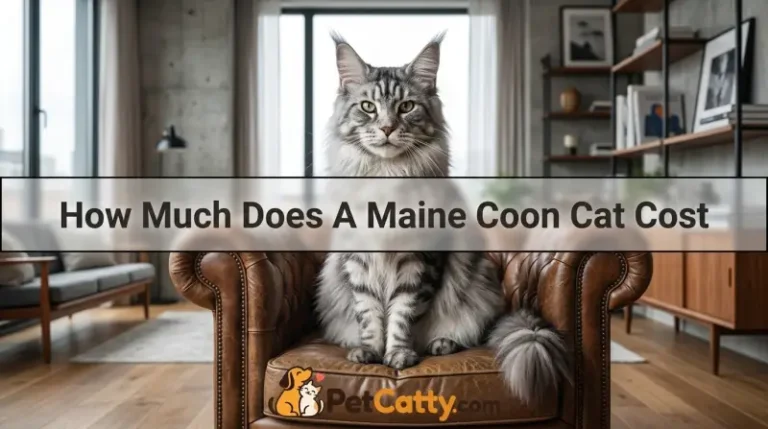
Per the Cat Fanciers' Association (CFA) breed standard and aggregate pricing data from ethical catteries, a well-bred Maine Coon from a health-tested lineage typically runs $1,200 to $3,500 as of 2026. Getting to that number means understanding the factors that push it up or down. Let's walk through each one so you know exactly what to expect and what to look for.
Quick Answer
A Maine Coon cat costs $800 to $5,000. It depends on quality, breeder, and location. Pet-quality kittens from ethical breeders average $1,000 to $1,500.
Show-quality kittens run $1,500 to $3,500. Rare colors like red or silver can add $300 to $1,000. Adoption fees are $50 to $200.
The breeder route costs more upfront but includes health testing and a guarantee. The rescue route saves money and gives an adult cat a home.
Why the Price Range Is So Wide
The price of a Maine Coon isn't random. It's driven by a handful of specific factors that stack on top of each other. Understanding these helps you see why one kitten costs $1,200 and another from a different cattery costs $3,000.
Breeder overhead and ethics. Responsible breeders screen for genetic diseases common in Maine Coons. Those include hypertrophic cardiomyopathy (HCM), spinal muscular atrophy (SMA), and pyruvate kinase deficiency (PKDef). Each echocardiogram for HCM runs $300 to $600 per parent.
DNA tests for SMA and PKDef add another $100 to $200 per cat. That testing gets passed into the kitten price. A breeder who skips it can charge less, but you're taking on the risk of a $5,000 vet bill later.
Registration and pedigree. TICA and CFA registered catteries pay fees for litter registration, individual kitten registration, and transfer of ownership. Those costs are small individually, maybe $30 to $50 per kitten. They add up across a small litter of three to five kittens.
Unregistered cats from unregistered breeders are cheaper, but you lose the paper trail on lineage and health.
Demand and waitlists. Maine Coons are one of the most popular breeds in the US. Ethical breeders often have waitlists six to eighteen months long. That demand lets them set higher prices.
A breeder with kittens available immediately might be a red flag, not a bargain.
Geographic location. Prices vary by region. The Northeast and West Coast tend to be higher, often $1,500 to $3,000 for pet quality. The Midwest and South are lower, sometimes $800 to $1,500 for the same quality.
That's driven by cost of living, cattery density, and local demand.
The real cost of a healthy kitten. Here's what goes into the price before the breeder makes any profit:
| Cost Category | Typical Amount |
|---|---|
| Health testing (both parents) | $600 to $1,200 |
| Veterinary care (kitten shots, deworming, checkups) | $200 to $400 |
| Microchipping and registration | $50 to $100 |
| Food and supplies (per kitten to 12 weeks) | $100 to $200 |
| TICA or CFA litter registration | $25 to $50 |
| Spay or neuter (if included) | $150 to $400 |
| Total per kitten (breeder cost) | $1,125 to $2,350 |
When you see a Maine Coon kitten for $500, that breeder is losing money or cutting corners. There's no way to cover those costs at that price point.
Breeder vs. Adoption: The Two Main Routes
You have two fundamentally different paths to getting a Maine Coon. They serve different goals, budgets, and timelines. Neither is inherently better, but they're not interchangeable.
Buying from a breeder is the route if you want a kitten with known lineage, predictable temperament, and a health guarantee. You're paying for predictability and support. The breeder will know the parents, the grandparents, and the health history going back generations.
They'll also be a resource for the cat's entire life. The cost is $800 to $5,000, and the wait is six to eighteen months.
Adopting from a rescue or shelter is the route if you want to save money, give an adult cat a home, and skip the kitten phase. Maine Coon-specific rescues exist across the US. General shelters occasionally get purebreds or mixes.
The fee is $50 to $200, and the cat is usually already spayed or neutered, vaccinated, and microchipped. You'll know the adult personality and size upfront. The downside is you won't get a kitten.
The pedigree may be unknown. You might not get a purebred at all.
The hybrid approach. Some breeders retire their breeding cats at four to six years old. These adults are already spayed or neutered, fully health tested, and known quantities. They're often available immediately for $100 to $500.
This is an excellent option for someone who wants a health-tested purebred Maine Coon without the wait or the kitten price.
Who should choose which?
| Factor | Breeder | Rescue | Retired Breeder |
|---|---|---|---|
| Price | $800 to $5,000 | $50 to $200 | $100 to $500 |
| Age | Kitten (8 to 16 weeks) | Adult (1 to 10+ years) | Adult (4 to 6 years) |
| Health guarantee | Yes (1 to 3 years) | Usually none | Yes (often shorter) |
| Known genetics | Yes | Rarely | Yes |
| Wait time | 6 to 18 months | Days to weeks | Days to weeks |
| Best for | First-time owners, show homes, families | Budget-conscious, experienced owners | Experienced owners, companion homes |
Pet Quality vs. Show Quality vs. Breeding Quality
Breeders categorize their kittens into three tiers. These aren't just marketing labels. They reflect real differences in conformation, temperament, and what the cat can be used for.
Pet quality is the most common category. These kittens have minor cosmetic flaws that keep them out of the show ring. Maybe the ear set is slightly off.
The eye color is a shade too light. The tail isn't quite long enough. They're perfectly healthy, wonderful companions, and they'll look like a Maine Coon to anyone who's not a judge.
Price: $800 to $1,500. These kittens are sold with a spay or neuter contract.
Show quality kittens meet the breed standard almost perfectly. They have the right head shape, ear placement, eye color, coat texture, and body proportions. Judges would look at them favorably in a competition.
Breeders often keep these for themselves or sell them to show homes. Price: $1,500 to $3,500. The contract usually requires the buyer to show the cat, or at least keep it intact for breeding evaluation.
Breeding quality is a subset of show quality. These are cats that the breeder thinks will improve the breed line. They have exceptional conformation, temperament, and health test results.
Breeders rarely sell these to the public. When they do, the price can reach $3,500 to $5,000 or more. The contract is strict about breeding standards and health testing.
A note on the terms. Some breeders use "pet quality" to mean "not a show cat." Others use it to mean "has a minor health issue." Always ask directly: "What specifically makes this kitten pet quality versus show quality?" A reputable breeder will tell you exactly what the flaw is and why it matters.
The decision tree for quality tier:
- If you want a companion and don't care about showing, pet quality is the best value.
- If you want to compete in TICA or CFA shows, show quality is necessary.
- If you want to breed, you should only do this with mentorship. Expect a long wait and high cost.
- If you're unsure, start with pet quality. You can always get into showing later with a different cat.
How Coat Color and Gender Affect the Price
Not all Maine Coons cost the same, even from the same breeder. Color and gender create real price differences that reflect rarity and demand.
Rare colors command a premium. The most common Maine Coon colors are brown tabby, black, and blue. These are the classic looks and they're widely available. Rare colors include red, silver, solid white, cream, and calico.
Red and silver are especially sought after. A pet-quality silver tabby can cost $500 to $1,000 more than the same quality brown tabby from the same litter.
Here's a rough breakdown of color premiums:
| Color | Rarity | Typical Premium |
|---|---|---|
| Brown tabby (classic or mackerel) | Common | $0 (baseline) |
| Black (solid) | Common | $0 to $100 |
| Blue (solid) | Common | $0 to $100 |
| Red (solid or tabby) | Rare | $300 to $800 |
| Silver (tabby or shaded) | Rare | $400 to $1,000 |
| Solid white | Rare | $500 to $1,000 |
| Calico or tortoiseshell | Rare (females only) | $300 to $700 |
| Smoke or shaded | Uncommon | $200 to $500 |
Why the price difference? Rarity is part of it. Breeder economics also play a role. A breeder who produces a rare color may have invested in a stud or queen with that specific color genetics.
They recoup that investment through higher prices. The color itself doesn't affect health or temperament. If you're not picky, you can save money by choosing a common color.
Gender also matters, but less than you'd think. Males are typically 15 to 25 pounds. Females are 10 to 15 pounds. Some breeders charge $100 to $300 more for males because they're larger and more impressive in the show ring.
Others charge the same regardless of gender. The price difference is smaller than the color difference.
The real question is: does gender matter for your home? Males are often described as more affectionate and dog-like. Females are more independent and sometimes less cuddly. These are generalizations, not guarantees.
Every cat has its own personality. If you don't have a strong preference, gender shouldn't drive your decision or your budget.
The Real Cost Beyond the Purchase Price
The purchase price is just the beginning. Maine Coons have ongoing costs that are higher than the average cat because of their size and coat. Here's what you need to budget for.
First-year costs are significant. You'll need a carrier, litter box, scratching posts, beds, toys, and bowls. A large, sturdy cat tree for a 20-pound cat costs $100 to $300. Food costs are higher because Maine Coons eat more than smaller breeds.
High-quality food runs $40 to $80 per month. Veterinary care for the first year includes multiple checkups, boosters, and the spay or neuter procedure. Total first-year expenses run $1,000 to $2,000 beyond the purchase price.
Annual ongoing costs add up. Food costs $480 to $960 per year. Litter runs $200 to $400 per year. Veterinary care for an adult cat is $200 to $500 per year for checkups and vaccines.
Grooming supplies add another $50 to $100 per year. Pet insurance costs $30 to $60 per month, or $360 to $720 per year. Total annual costs for a healthy adult Maine Coon are $1,200 to $2,500.
The cost of health issues. HCM is a serious concern in Maine Coons. Annual echocardiograms for a cat with HCM cost $300 to $600. Emergency vet visits for urinary blockages or injuries can run $1,000 to $5,000.
Dental cleanings cost $200 to $500. These aren't guarantees, but they're real risks. Budgeting for them is smart.
The total cost of ownership over 12 to 15 years. A conservative estimate is $15,000 to $30,000 over the cat's lifetime. This includes the purchase price, food, litter, vet care, grooming, and insurance. The actual number depends on your choices and your cat's health.
Knowing this upfront helps you plan.
Red Flags and Scams to Watch For
The Maine Coon's popularity makes it a target for scammers. Knowing the warning signs can save you hundreds or thousands of dollars.
Too good to be true. If a kitten is priced under $500, it's almost certainly a scam or a kitten mill. Reputable breeders cannot cover their costs at that price. The exception is a retired breeder from a reputable cattery.
Even then, $100 to $500 is the low end.
Pressure to pay immediately. Scammers create urgency. They'll say other buyers are interested or the price goes up tomorrow. A reputable breeder puts you on a waitlist and asks for a deposit.
They don't pressure you to pay the full amount immediately.
No cattery visit. Scammers refuse in-person visits. They'll say the cattery is in a remote location or they don't allow visitors. A reputable breeder welcomes visits.
They want you to see the environment and meet the parents.
Stock photos or stolen images. Reverse image search any photos. Scammers use pictures from other websites. A reputable breeder has their own photos of their cats.
Ask for a specific photo, like the kitten holding a certain toy. If they can't produce it, walk away.
Payment methods that can't be traced. Scammers ask for wire transfers, gift cards, or cryptocurrency. These are hard to trace and cannot be reversed. A reputable breeder accepts credit cards, PayPal, or cash at pickup.
They don't ask for untraceable payments.
The contract is missing. A reputable breeder provides a written contract. It includes the health guarantee, spay or neuter clause, and return policy. If the breeder won't give you a contract, that's a red flag.
Don't proceed without one.
Shipped kittens without a health certificate. Some scammers offer to ship a kitten without a health certificate from a veterinarian. This is illegal in many states. A reputable breeder provides a health certificate signed by a licensed vet.
They also ensure the kitten is old enough to travel, usually 12 to 16 weeks.
The breeder has multiple breeds available. A breeder who offers many different breeds is likely a commercial operation, not a hobby breeder. This doesn't automatically mean they're bad, but it's a sign they prioritize volume over quality. Specialized Maine Coon breeders focus on one or two breeds.
What to do if you spot a scam. Walk away. Report the breeder to the Better Business Bureau and your state's attorney general. You can also report them to TICA or CFA if they claim registration.
Losing a deposit is bad. Losing $1,000 to a scam is worse.
Adoption: What to Expect and What It Costs
Adopting a Maine Coon is a different experience than buying from a breeder. It's worth considering if you're flexible on age and purebred status.
Where to find Maine Coons for adoption. Search for Maine Coon-specific rescues in your state. National organizations like the Maine Coon Rescue Network list cats across the country. General shelters also get purebreds and mixes.
Check Petfinder and Adopt-a-Pet with "Maine Coon" as the breed filter. Be aware that most cats listed as Maine Coons in shelters are mixes. True purebreds are rare in shelters.
The adoption process. Most rescues require an application, a home visit, and a fee. The fee covers spay or neuter, vaccinations, microchipping, and sometimes a vet check. The process can take a few days to a few weeks.
Some rescues have waitlists for Maine Coons because demand is high.
What you get for the fee. A $50 to $200 adoption fee includes a cat that is already spayed or neutered. They're vaccinated and microchipped. You also get a known adult personality.
You know if the cat is good with kids, dogs, or other cats. You don't get a kitten, and you don't get a guarantee of purebred status.
The pros and cons of adoption. The biggest pro is cost. The biggest con is you might not get a purebred Maine Coon. You also get an adult cat, not a kitten.
For many people, that's a pro. Adult cats are calmer, their personalities are known, and they're past the destructive kitten phase. If you're an experienced cat owner, adoption is a great option.
A note on Maine Coon mixes. A cat that looks like a Maine Coon may not be a purebred. Long hair, large size, and ear tufts are common in many breeds. The only way to know for sure is a DNA test or pedigree papers.
If you want a purebred, adoption is risky. If you want a great cat, it doesn't matter.
How to Find a Reputable Breeder
Finding a reputable breeder takes time. It's the most important step in the process. A good breeder is the difference between a healthy, well-socialized cat and a lifetime of problems.
Start with the breed clubs. The Maine Coon Breeders and Fanciers Association (MCBFA) maintains a list of member breeders. TICA and CFA also have breeder directories. These breeders have agreed to follow a code of ethics.
They're not guaranteed to be perfect, but it's a good starting point.
Attend a cat show. Cat shows are the best place to meet breeders in person. You can see their cats, talk to them about their program, and see how their cats behave. You can also ask other exhibitors for recommendations.
Breeders who show their cats are invested in the breed's future.
Ask the right questions. When you contact a breeder, ask about health testing. Do they test for HCM, SMA, and PKDef? Can they show you the results?
How often do they test? Ask about the parents. Can you meet them?
What is their temperament? Ask about the kittens. How are they socialized?
When can you visit?
Look for transparency. A reputable breeder openly shares health test results. They show you the parents. They talk about the breed's weaknesses as well as its strengths.
They ask you questions too. They want to know if their kittens are going to a good home. If a breeder doesn't ask you anything, that's a red flag.
Expect a wait. Reputable breeders have waitlists. They don't have kittens available immediately. If they do, ask why.
Sometimes a previous buyer backed out. That's normal. But if they always have kittens available, they might be a high-volume breeder.
Read the contract carefully. The contract should include a health guarantee, a return policy, and a spay or neuter clause. The health guarantee should cover genetic defects for at least one year. The return policy should say the breeder will take the cat back at any time for any reason.
A good breeder never wants a cat to end up in a shelter.
Trust your gut. If something feels wrong, walk away. There are plenty of breeders. You don't need to settle for one who makes you uncomfortable.
A good breeder is a partner for the life of the cat. Choose carefully.
Decision Guide: Which Route Is Right for You?
This decision tree walks you through the options based on your situation. Start at the top and follow the path that fits.
Do you want a kitten?
- Yes, I want a kitten → Go to the next question.
- No, I'm open to an adult → Consider adoption or a retired breeder.
Do you need a purebred with papers?
- Yes, I want a purebred with a known pedigree → Go to the breeder route.
- No, I just want a cat that looks like a Maine Coon → Adoption is a great option.
Can you afford $1,000 to $3,500 upfront?
- Yes → Go to the breeder route.
- No → Adoption or a retired breeder is more affordable.
Are you willing to wait 6 to 18 months?
- Yes → A breeder is the right choice.
- No → Look for a retired breeder or check rescues for available cats.
Do you have experience with large breeds?
- Yes → Any route works.
- No → A breeder provides more support, especially for first-time owners.
The bottom line:
- Buy from a breeder if you want a kitten, a known pedigree, and a health guarantee. Budget $1,000 to $3,500 and expect to wait.
- Adopt if you want an adult cat, a lower cost, and immediate availability. Budget $50 to $200 and expect a mix or unknown lineage.
- Get a retired breeder if you want a purebred adult with health testing, no wait, and a lower price. Budget $100 to $500.
Frequently Asked Questions
How much is a Maine Coon cat in the US?
A Maine Coon cat costs $800 to $5,000 in the US. Pet-quality kittens from reputable breeders average $1,000 to $1,500. Show-quality kittens run $1,500 to $3,500.
Adoption fees are $50 to $200. Rare colors and males usually cost more.
Why are Maine Coon cats so expensive?
Maine Coons are expensive because of the costs of responsible breeding. Health testing for HCM, SMA, and PKDef costs $600 to $1,200 per parent pair. Veterinary care, registration, and socialization add more.
Breeders cannot cover these costs and charge less than $800 to $1,000 per kitten.
Can I get a Maine Coon cat for free?
Getting a free Maine Coon is extremely rare. You might find a retired breeder or an adult cat being rehomed for a small fee. Free kittens are almost always scams or from irresponsible owners.
If you see a free Maine Coon, be cautious and ask for proof of health testing.
What is the cheapest way to get a Maine Coon?
The cheapest way is adoption. Maine Coon rescues and general shelters charge $50 to $200. The cat is usually spayed or neutered, vaccinated, and microchipped.
You get an adult cat with a known personality. The tradeoff is you might not get a purebred or a kitten.
How much does a Maine Coon kitten cost from a breeder?
A Maine Coon kitten from a breeder costs $800 to $3,500. Pet-quality kittens are $800 to $1,500. Show-quality kittens are $1,500 to $3,500.
Rare colors add $300 to $1,000. Males cost $100 to $300 more than females. The price includes health testing, registration, and a health guarantee.
What is the total cost of owning a Maine Coon?
The total cost of owning a Maine Coon over 12 to 15 years is $15,000 to $30,000. This includes the purchase price, food, litter, vet care, grooming, and insurance. First-year costs are $1,000 to $2,000 beyond the purchase price.
Annual costs for a healthy adult are $1,200 to $2,500.