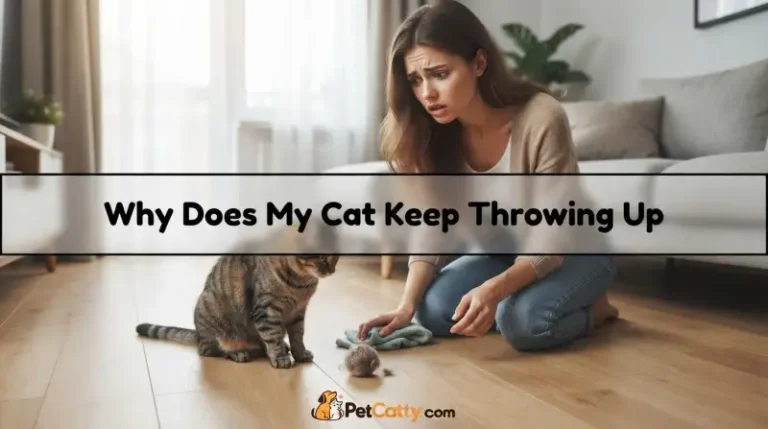
Your cat just threw up on the rug. Now you're standing there with a paper towel, wondering if this is normal or if you should be calling the vet. If you're asking "why is my cat throwing up," you're not alone.
It's one of the most common concerns cat owners face. And the answer isn't always obvious.
According to the American Veterinary Medical Association, vomiting is among the top five reasons owners bring cats to the vet. But not every episode requires a trip to the clinic. The key is knowing what to look for and when to act.
Let's walk through this together, step by step.
Quick Answer
Cat vomiting can be caused by hairballs, eating too fast, diet changes, or more serious conditions like kidney disease or an obstruction. Check the color, frequency, and your cat's behavior. Most cases are harmless.
But repeated vomiting, blood, or a lethargic cat requires a vet visit.
Quick Triage: Is This an Emergency?
Some situations need immediate veterinary attention. Others can wait until morning. The first thing you need to do is decide which category you're in.
Call your vet or an emergency clinic right now if your cat shows any of these signs:
- Vomiting more than 2 to 3 times in 24 hours
- Blood in the vomit (red or looks like coffee grounds)
- Lethargy or hiding behavior
- Not eating or drinking for more than 12 hours
- Straining to vomit but nothing comes up (dry heaving)
- Bloated or painful belly
- Exposure to a known toxin (lilies, antifreeze, human medications)
If none of those apply, you can move to the next step and start gathering clues.
Here's a quick reference table for the red flags:
| Symptom | What to Do |
|---|---|
| Vomiting 1-2 times, cat acting normal | Monitor at home for now |
| Vomiting 3+ times in 24 hours | Call vet today |
| Blood in vomit | Go to emergency vet |
| Lethargic + not eating | Go to emergency vet |
| Dry heaving with no vomit | Possible obstruction. Go to emergency vet |
| Known toxin exposure | Go to emergency vet immediately |
Per the American Association of Feline Practitioners, any vomiting that continues beyond 24 hours or is accompanied by lethargy, diarrhea, or loss of appetite warrants a veterinary exam. Don't gamble with those signs.
The First Clue: Is It Vomiting or Regurgitation?
This is the single most important distinction you can make. It changes the entire list of possible causes. And most people get it wrong.
Vomiting is an active process. Your cat's stomach muscles contract forcefully. You'll see heaving, retching, and sometimes drooling before the material comes up.
The vomit is usually partially digested food, yellow bile, or foam. It happens minutes to hours after eating.
Regurgitation is passive. The food comes up from the esophagus, not the stomach. There's no heaving, no retching.
Your cat just lowers its head and the food appears. It usually happens right after eating. The food is still in its original shape.
Undigested kibble, for example.
Here's a side-by-side comparison:
| Feature | Vomiting | Regurgitation |
|---|---|---|
| Process | Active, heaving, retching | Passive, no effort |
| Timing | Minutes to hours after eating | Immediately or within minutes |
| Contents | Partially digested, may have bile | Undigested, tubular shape |
| Sound | Retching, gagging | Quiet, just a burp-like action |
| Common causes | Hairballs, illness, food intolerance | Esophageal issues, eating too fast, megaesophagus |
Why this matters for your decision tree. If it's regurgitation, the problem is usually in the esophagus or the cat's eating habits. If it's vomiting, the problem is in the stomach or beyond. Your next steps depend on knowing which one you're dealing with.
If you're still unsure, watch your cat the next time it happens. Better yet, record a video. Your vet will thank you.
Why the Color and Consistency of the Vomit Matters
The color of your cat's vomit is a powerful clue. It tells you where the material came from, how long it's been there, and sometimes what's wrong.
Here's what different colors typically mean, based on guidelines from the Cornell University College of Veterinary Medicine Feline Health Center:
| Vomit Color | What It Usually Indicates |
|---|---|
| Clear or white foam | Stomach acid, empty stomach, or mild nausea |
| Yellow or greenish-yellow | Bile from the small intestine. Common when vomiting on an empty stomach |
| Brown (like coffee grounds) | Digested blood. This is an emergency |
| Bright red blood | Fresh blood from the esophagus, stomach, or upper GI tract. Emergency |
| Green (not just yellow) | Could be bile. Could also mean the cat ate grass or a plant |
| Undigested food (kibble still visible) | Regurgitation or vomiting very soon after eating |
| Tubular, log-shaped deposit | Classic hairball appearance |
Yellow bile is the most common color we see in feline medicine. It means the stomach is empty. Your cat's body is churning, and there's nothing but bile to bring up.
This often happens in the morning or after a long stretch without food.
Brown, coffee-ground vomit is not a wait-and-see situation. That's blood that has been partially digested. It means there's bleeding somewhere in the upper GI tract.
Go to the vet.
Green vomit can be confusing. If your cat just ate grass, that's likely the cause. But if there's no grass in the vomit and the color is a deep green, it could be bile mixed with stomach contents.
In rare cases, it could indicate a liver issue.
The consistency matters too. Foamy vomit suggests the stomach lining is irritated. Chunky vomit with food pieces means it happened shortly after eating. Hairballs are unmistakable.
They look like a wet, cigar-shaped mat of fur.
Take a photo of the vomit before you clean it up. It's a free diagnostic tool for your vet.
The Vomiting Timeline: Acute vs. Chronic
How long has this been going on? That's the next question to answer.
Acute vomiting means it just started. Your cat has thrown up once or twice in the last 24 hours. That's unusual.
This is the most common scenario. Causes include:
- Eating something disagreeable (table scraps, spoiled food, a bug)
- Eating too fast or too much
- Hairball
- Mild gastroenteritis (stomach bug)
- Reaction to a new food or treat
- Stress or anxiety
Chronic vomiting means it happens regularly. Once a week or more, for several weeks or months. This is a different ball game.
Possible causes include:
- Inflammatory bowel disease (IBD)
- Chronic kidney disease (especially in older cats)
- Hyperthyroidism
- Food allergy or intolerance
- Pancreatitis
- Dental disease (causing the cat to swallow bacteria)
- Parasites (whipworms, giardia)
- Cancer (lymphoma, especially in older cats)
The timeline changes the urgency. Acute vomiting with a normal cat is usually fine to monitor at home for 12 to 24 hours. Chronic vomiting needs a vet workup, even if the cat seems fine otherwise. The underlying disease can progress silently.
Here's a quick decision rule from the American Association of Feline Practitioners: if your cat has vomited three or more times in the past 24 hours, or if vomiting has been happening at least twice a month for more than two months, schedule a veterinary exam.
The Hairball Question: When It's Normal and When It's Not
Hairballs get a lot of attention. But they're not the most common cause of vomiting. And they're often overblamed.
What a normal hairball looks like. Your cat grooms itself, swallows hair, and most of it passes through the digestive tract. Some hair stays in the stomach and forms a mat. Eventually, the cat vomits it up.
The classic hairball is a wet, tubular mass of fur. It often comes with some bile and foam. It might look like a cigar or a small log.
How often is normal? For long-haired cats, one to two hairballs per month is within normal range. For short-haired cats, once every few months is typical. More frequent than that, and there's likely an underlying issue.
When hairballs are a red flag. Frequent vomiting that looks like hairballs but happens more than twice a month could indicate:
- Inflammatory bowel disease (the gut isn't moving hair through properly)
- Excessive shedding (skin issues, allergies, stress)
- A motility problem in the stomach
- A hairball that has grown too large to pass (rare but dangerous)
The real danger: a hairball that gets stuck. If your cat is retching, dry heaving, or trying to vomit but nothing comes out, that could be a hairball stuck in the stomach or esophagus. This is a veterinary emergency. A lodged hairball can cause obstruction.
Surgical removal is sometimes needed.
What you can do. Regular brushing reduces the amount of hair your cat swallows. Hairball-specific diets or lubricants (like those containing petrolatum or psyllium) can help hair move through the system. But if your cat is vomiting hairballs more than twice a month despite these measures, it's time to look deeper.
The research from the Cornell Feline Health Center suggests that chronic hairball vomiting in otherwise healthy cats is often a sign that the digestive tract is not functioning optimally. Don't just accept it as "normal for a long-haired cat." Get it checked.
Common Causes by Age: Kitten, Adult, and Senior
Your cat's age narrows down the list of likely causes. Different life stages come with different risks.
Kittens (Under 1 Year)
Kittens have developing immune systems and curious mouths. They explore the world by tasting it. Common causes of vomiting in kittens include:
- Dietary indiscretion. Eating something they shouldn't. A bug, a piece of string, a houseplant.
- Parasites. Roundworms and tapeworms are common in kittens. They can cause vomiting and a pot-bellied appearance.
- Sudden diet changes. Switching kitten food brands too fast can upset their stomach.
- Infections. Feline panleukopenia (distemper) or other viral infections can cause severe vomiting.
- Foreign body obstruction. Kittens swallow small objects. Think toy mice, rubber bands, tinsel.
Kitten vomiting is more serious than adult vomiting. Kittens dehydrate fast. They have less reserve. If your kitten vomits more than twice, or seems lethargic, see a vet right away.
Adult Cats (1 to 10 Years)
Adult cats are the most resilient age group. They also have the widest range of possible causes. Common ones include:
- Hairballs. Most common in long-haired breeds, but any cat can get them.
- Food intolerance or allergy. Some cats can't tolerate certain proteins (chicken, beef, fish) or grains.
- Eating too fast. Some cats wolf down their food and vomit it back up whole.
- Inflammatory bowel disease. This often starts in middle age. It causes chronic vomiting and diarrhea.
- Pancreatitis. Inflammation of the pancreas. It causes vomiting, lethargy, and abdominal pain.
- Stress. New pet, new baby, moving. Stress can trigger vomiting in sensitive cats.
Senior Cats (Over 10 Years)
Senior cats have a higher risk of systemic disease. Vomiting in an older cat should never be dismissed as "just a hairball."
- Chronic kidney disease (CKD). This is the most common cause of vomiting in senior cats. The kidneys can't filter toxins, so they build up in the blood. This causes nausea and vomiting.
- Hyperthyroidism. An overactive thyroid causes weight loss, increased appetite, and vomiting.
- Dental disease. Bad teeth cause pain and inflammation. Cats swallow bacteria, which can upset the stomach.
- Cancer. Lymphoma and other GI cancers are more common in older cats.
- Constipation. Older cats get constipated. This can cause reflex vomiting.
The rule for senior cats. Any vomiting in a cat over 10 years old warrants a vet visit. Even if it seems mild. The underlying cause is often treatable, but early detection matters.
The Decision Tree: What to Do Based on What You See
This is where everything comes together. Follow these steps in order. Each step narrows the path.
Step 1: Is It an Emergency?
Refer back to the red flags in the Quick Triage section. If yes, stop reading and go to the vet. If no, continue.
Step 2: Is It Vomiting or Regurgitation?
If it's regurgitation, the problem is likely in the esophagus. Try feeding smaller meals from a raised bowl. Slow down fast eaters with a puzzle feeder.
If regurgitation continues, see the vet.
If it's vomiting, continue.
Step 3: How Often Is It Happening?
Once or twice in 24 hours. Monitor at home. Withhold food for 4 to 6 hours. Then offer a small amount of a bland diet.
Three or more times in 24 hours. Call the vet. Your cat could be dehydrated or have an obstruction.
Once a week for weeks or months. This is chronic vomiting. Schedule a vet visit for a workup.
Step 4: What Does the Vomit Look Like?
Yellow bile. Empty stomach. Try feeding smaller, more frequent meals. If it happens every morning, consider a late-night meal.
Undigested food. Your cat ate too fast or the food didn't agree with it. Slow down mealtime. Consider a food change.
Hairball. Normal if once or twice a month. Increase brushing and hairball remedies.
Blood (red or coffee grounds). Emergency. Go to the vet.
Worms. Your cat has intestinal parasites. A vet can prescribe dewormer.
Step 5: How Is Your Cat Acting?
Normal, playful, eating. Low risk. Monitor at home.
Lethargic, hiding, not eating. High risk. See the vet.
Drinking more than usual. Possible kidney disease or hyperthyroidism. Bloodwork is needed.
Step 6: What Changed Recently?
New food. Go back to the old food. Transition slowly next time.
New treat. Stop the treat. See if vomiting stops.
New stressor. Try to reduce stress. Use pheromone diffusers or calming supplements.
Access to plants or toxins. Check for lilies, sago palm, or other toxic plants. Remove them.
When You Can Handle It at Home: A Safe Step-by-Step
If your cat falls into the low-risk category, you can try home care. Here's a safe, vet-approved protocol.
Step 1: Withhold Food (But Not Water)
Remove food for 4 to 6 hours. This gives the stomach time to settle. Do not withhold water.
Dehydration is the biggest risk with vomiting.
Step 2: Offer a Bland Diet
After the fast, offer a small amount of bland food. Good options include:
- Boiled, skinless chicken breast (shredded, no seasoning)
- Plain canned pumpkin (not pie filling)
- A commercial bland diet from your vet
- Plain white rice with a little boiled chicken
Offer about a tablespoon first. If your cat keeps it down for an hour, offer another small portion.
Step 3: Watch for 24 Hours
Monitor your cat closely for 24 hours. Note any further vomiting. Check that appetite and energy return.
Make sure your cat is drinking water.
Step 4: Gradually Return to Normal Food
If there's no vomiting for 24 hours, slowly reintroduce your cat's regular food. Mix 25% regular food with 75% bland food. Then 50/50.
Then 75/25. Then full regular food. Each transition should last a day.
Step 5: When to Stop Home Care
If vomiting resumes at any point, stop home care. Call the vet. Home management is only for mild, self-limiting cases.
Mistakes That Can Make Things Worse
Some well-intentioned actions can actually harm your cat. Avoid these common mistakes.
Withholding water. This is dangerous. Vomiting causes fluid loss. Cats need water to stay hydrated.
If your cat won't drink, see the vet.
Giving human medications. Never give your cat ibuprofen, acetaminophen (Tylenol), aspirin, or Pepto-Bismol. These are toxic to cats. Even small doses can cause kidney failure or liver damage.
Giving milk. Many cats are lactose intolerant. Milk can cause diarrhea and make vomiting worse. Stick to water.
Changing food abruptly. If you think the food is the problem, don't just switch to a new bag. Sudden diet changes cause stomach upset. Transition slowly over 7 to 10 days.
Ignoring chronic vomiting. If your cat vomits weekly and you've accepted it as normal, stop. Chronic vomiting is a sign of an underlying condition. It's not normal.
Forcing your cat to eat. If your cat is nauseous, forcing food will make it worse. Offer food, but don't force it. If your cat hasn't eaten for 24 hours, call the vet.
Using over-the-counter dewormers without diagnosis. Not all vomiting is caused by worms. And not all dewormers are safe for all cats. Your vet can identify the specific parasite and prescribe the right medication.
What to Tell the Vet So You Save Time and Money
When you call or visit the vet, you'll get more value if you come prepared. Here's what to have ready.
Information to gather:
- How many times your cat vomited in the last 24 hours
- The color and consistency of the vomit (show a photo if you have one)
- When the vomiting started
- What your cat ate in the last 48 hours
- Any new foods, treats, or medications
- Any access to plants, toxic substances, or small objects
- Your cat's behavior (lethargic, hiding, normal)
- Whether your cat is drinking and urinating normally
- Any other symptoms (diarrhea, weight loss, increased thirst, changes in appetite)
- Your cat's age, breed, and any existing medical conditions
What to bring to the vet:
- A photo of the vomit (or a sample in a sealed bag, if fresh)
- A list of any medications your cat is on
- A list of all foods and treats your cat eats
- Any packaging from new items (treats, toys, plants)
What the vet will likely do:
- Physical exam (palpate the abdomen, check gums, feel for dehydration)
- Bloodwork (CBC, chemistry panel, thyroid levels)
- Fecal exam (check for parasites)
- Urinalysis (check kidney function)
- X-rays or ultrasound (rule out obstruction, look at organ size)
How you can save money:
- Call ahead. Ask about estimates and payment options.
- Bring a photo of the vomit. It may save the cost of a diagnostic test.
- Be honest about your budget. Vets can often prioritize the most essential tests.
- Ask about pet insurance. It's too late now, but it helps for future episodes.
When Home Care Isn't Enough: Red Flags to Watch For
Home care is only appropriate for mild, isolated vomiting. If any of these signs appear, stop home care and call the vet.
Red flags that require a vet visit:
- Vomiting continues beyond 24 hours
- Vomiting resumes after a brief period of improvement
- Your cat refuses to eat for more than 12 hours
- Your cat refuses to drink for more than 12 hours
- Your cat seems lethargic, weak, or depressed
- Your cat is hiding or avoiding interaction
- Vomiting is accompanied by diarrhea
- You see blood in the vomit or stool
- Your cat's belly looks bloated or feels hard
- Your cat is straining to vomit but nothing comes up
- Your cat has lost weight
- Your cat is drinking more water than usual
- Your cat is urinating more than usual
- Your cat is a kitten or a senior cat
The bottom line on red flags. Trust your gut. If something feels wrong, it probably is. You know your cat better than anyone.
A vet visit is never a waste if it gives you peace of mind.
Long-Term Prevention: Diet, Habits, and Routine Care
Once you've resolved the current episode, think about prevention. Some cats are simply more prone to vomiting. But you can reduce the frequency.
Diet
- Feed a high-quality, consistent diet. Choose a food made with named protein sources and limited fillers. Stick with one brand and formula.
- Transition new foods slowly. Over 7 to 10 days. Mix increasing amounts of new food with the old food.
- Consider a limited-ingredient diet. If your cat has food sensitivities, a novel protein (duck, rabbit, venison) or hydrolyzed protein diet can help.
- Feed smaller, more frequent meals. Instead of two large meals, try three or four smaller ones. This prevents the stomach from getting too empty or too full.
- Use a slow feeder or puzzle feeder. These prevent fast eating. They also provide mental stimulation.
- Elevate the food bowl. Some cats eat more comfortably from a raised bowl. This can reduce regurgitation.
Habits
- Brush your cat regularly. Especially if it's a long-haired breed. Daily brushing reduces the amount of hair your cat swallows.
- Provide hairball remedies. A hairball-specific food or a lubricant (like a petroleum-based gel) can help hair pass through the system.
- Keep toxic plants out of reach. Lilies are the most dangerous. But also avoid sago palm, azaleas, tulips, and daffodils.
- Keep small objects off the floor. Rubber bands, hair ties, string, tinsel, and toy mice can cause obstruction.
- Reduce stress. Use pheromone diffusers (Feliway), provide vertical space, and maintain a consistent routine.
Routine Care
- Annual vet visits. Bloodwork can catch kidney disease, hyperthyroidism, and other conditions early.
- Dental care. Brush your cat's teeth or use dental treats. Bad teeth cause inflammation and can lead to vomiting.
- Parasite prevention. Use a vet-recommended dewormer and flea prevention. Parasites can cause vomiting.
- Weight management. Overweight cats are at higher risk for pancreatitis and other GI issues.
The Bottom Line: Trust Your Gut, Know the Signs
Most cat vomiting is harmless. It's a hairball or a mild stomach upset. But you need to know the difference between a minor issue and a serious one.
Here's your cheat sheet:
Home care is fine if:
- Your cat vomits once or twice and acts normal
- The vomit is a hairball or yellow bile
- Your cat is eating, drinking, and playing normally
- The episode is isolated and resolves in 24 hours
Call the vet if:
- Vomiting continues past 24 hours
- Your cat vomits three or more times in a day
- You see blood in the vomit
- Your cat is lethargic or not eating
- Your cat is a kitten or a senior
- You suspect a foreign body or toxin exposure
You know your cat better than anyone. If your cat is acting off, even if you can't put your finger on it, trust that feeling. A vet visit is never a waste.
As of 2026, there are better diagnostic tools than ever for feline GI issues. Bloodwork, ultrasound, and even feline-specific GI panels can pinpoint the cause. Don't settle for "my cat just throws up sometimes." Get to the bottom of it.
Frequently Asked Questions
Is it normal for cats to throw up every day?
No. Daily vomiting is not normal. It could indicate a chronic condition like inflammatory bowel disease, kidney disease, or hyperthyroidism.
Schedule a vet visit for a full workup.
What does it mean when a cat throws up undigested food?
It usually means regurgitation, not vomiting. The food comes up from the esophagus before it reaches the stomach. Causes include eating too fast, food allergies, or esophageal issues.
Why is my cat throwing up yellow liquid?
Yellow liquid is bile. It means your cat's stomach is empty. This often happens in the morning or after a long stretch without food.
Try feeding smaller, more frequent meals.
Can cat food cause vomiting?
Yes. Some cats have food intolerances or allergies to certain proteins (chicken, beef, fish) or fillers. A sudden diet change can also cause vomiting.
Transition new foods slowly over 7 to 10 days.
What should I do if my cat throws up a worm?
Take a photo of the worm. Collect a sample if possible. Call your vet.
Your cat needs a dewormer. Do not use over-the-counter dewormers without a diagnosis.
How long is too long for a cat to throw up?
If vomiting continues beyond 24 hours, or if your cat vomits three or more times in a single day, call the vet. Dehydration can set in quickly, especially in kittens and senior cats.